A new video gives members of the public their first glimpse inside the University of Reading’s animal research facility.
The Biological Resource Unit (BRU), opened in 2021 in the Health and Life Sciences building, houses the mice, rats, and zebrafish used in University research to understand various medical treatments.
The virtual walkthrough shows the procedural rooms, cleaning and care facilities, and the spaces where animals are looked after.
Andrew Cripps, technical head at the BRU, said: “Our research advances understanding of major conditions including cardiovascular disease, pain, ageing and cancer, but animal welfare sits at the heart of everything we do.
“Every study is scrutinised by independent reviewers before any work can begin, and our care team holds the authority to pause or stop any experiment if an animal’s welfare is affected.
“We are committed to replacing animal use wherever possible, reducing the numbers involved, and refining our methods to minimise suffering, and new technologies are opening up more opportunities to do that all the time.
“We think it’s important that people can see for themselves how this work is carried out, and how seriously we take the welfare of every animal in our care.”
Watch: Experience a virtual walk-through of the University of Reading’s Biological Resource Unit
Improving understanding of animal research at Reading
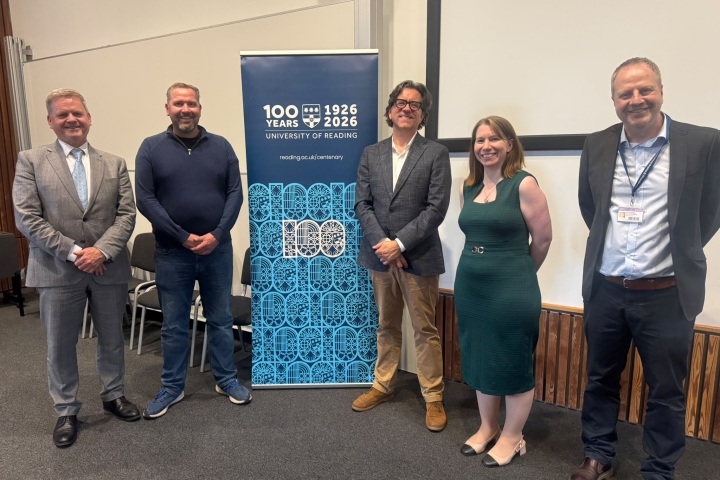
The virtual walk-through was premiered at a public lecture event discussing the ‘past, present and future of animal research at Reading’, funded by the Centenary Project Grant Scheme, on Thursday, 4 June.
The lecture, attended by members of the local community, students, university staff, was opened by John Meredith, from Understanding Animal Research, who discussed public attitudes towards animal research over the past three decades, and the significance of employing openness and transparency in animal research.
His talk was followed by a presentation from Professor Gary Stephens, who discussed his work with llamas to develop medical treatments using nanobodies. The lecture closed with a question-and-answer session with the audience.
Rewatch the public lecture: The Past Present and Future of Animal Research at Reading
Before and after the lecture, members of the audience were asked to fill in a short survey in which they were asked:
- How confident are you that you understand why animals are used in scientific research? (1 = not at all, 5 = very confident)
- How much do you agree that animal research at universities is properly regulated? (1 = not at all, 5 = very confident)
- How much do you agree that researchers take animal welfare seriously? (1 = not at all, 5 = very confident)
- How much do you agree that researchers are open about their animal research? (1 = not at all, 5 = very confident)
Scores were compared after the lecture. Confidence in understanding why animals are used in scientific research rose from an average of 3.4/5 before the lecture to 4.5/5 afterwards. Views on regulation, welfare, and openness were generally positive before the lecture and moved higher for most participants after it. Agreement that research is properly regulated and that researchers take animal welfare seriously each increased for the majority of matched respondents.
Members of the audience were also asked to use words to describe their feelings towards animal research. Words used to describe feelings about animal research also changed noticeably in tone — words such as ‘Unsure’, ‘Conflicted’, and ‘Neutral’ before the lecture gave way to ‘Informed’, ‘Confident’, and ‘Important’ afterwards.
Find out more about animal research at Reading
More information about animal research at Reading can be found via a dedicated webpage that is continuously updated: Animal research
In the weeks leading up to the public lecture, a programme of work highlighted the various elements of animal research at the University of Reading. Read:
- Animal procedures by Reading scientists down in 2025
- Mouth stem cells could help beat brain cancer defences
- Shrimp minds and welfare to be researched at Reading
- Magic mushroom chemical cuts nerve pain and enhances drug
- Five new llamas join research herd at Reading farm
- Stem cell particles study set to tackle chronic nerve pain
- FROM THE VICE CHANCELLOR: Talking and listening about animals in research