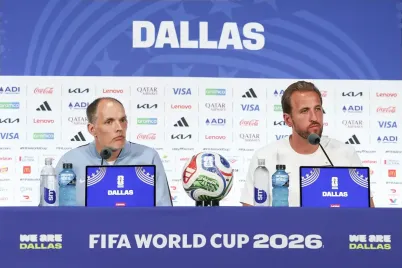

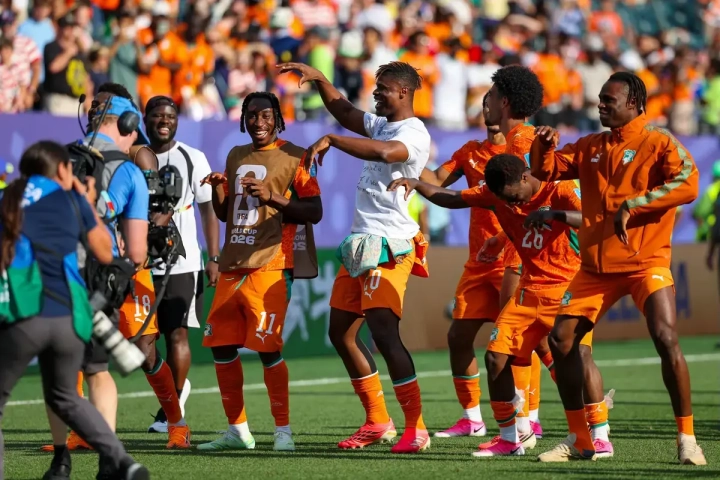
The margin for error has officially vanished at the 2026 FIFA World Cup. As the group stages give way to the tension of knockout football, the Round of 32 serves up an utterly compelling encounter. On Tuesday, 30 June 2026, Ivory Coast and Norway will lock horns in a fixture brimming with intrigue, contrasting styles, and immense historical weight. Scheduled for an 18:00 BST kick-off at Dallas Stadium in Arlington, Texas, this contest represents a golden opportunity for both nations to advance. The stakes are immense; a place in the last sixteen awaits the victor, while the loser faces an immediate flight home.
A Historic Return and an African Ambition
For Norway, merely participating in this tournament represents a monumental achievement that has ended nearly three decades of frustration. The Scandinavian nation has not graced the World Cup since France 1998, a 28-year exile that saw successive generations fall short. Now, driven by a squad widely heralded as their modern golden generation, they have not only arrived but advanced. The weight of history is profound; their best-ever performance at a World Cup remains reaching the Round of 16 in 1938 and 1998. Advancing past Ivory Coast would see Ståle Solbakken’s men equal those legendary campaigns.
On the opposite side of the pitch, Ivory Coast carry the hopes of West Africa on their shoulders. Known for their phenomenal athletic pedigree, the Elephants remain one of their continent’s most formidable forces. Translating continental prowess into deep World Cup runs has, however, often proven challenging. This Round of 32 represents the perfect platform to break through the glass ceiling and establish themselves as genuine intercontinental contenders. The match is not just a battle for progression; it is a clash of footballing cultures and soaring national ambitions.
Norway’s Eventful Path Through Group I
Norway’s route to the knockout rounds has been nothing short of wildly entertaining, characterised by attacking brilliance and occasional defensive vulnerability. Positioned in Group I, they secured qualification by finishing second, amassing six points from a possible nine. Their campaign commenced in Boston, where they ruthlessly dismantled Iraq 4-1. That statement of intent was followed by an arduous test against Senegal. In a thrilling back-and-forth encounter in New Jersey, the Norwegians demonstrated remarkable resilience to emerge 3-2 victors, a result that ultimately guaranteed their progression.
Their momentum was abruptly halted in the final group fixture against the reigning heavyweights of European football, France. Returning to Boston, Solbakken’s side were outplayed in a humbling 4-1 defeat. That loss served as a stark reality check, highlighting the ruthless efficiency required to compete against the absolute elite. Despite the setback, the mood within the camp remains fiercely optimistic. Their journey has even generated regional headlines, with the team’s trademark “Viking row” celebration reportedly causing a stir and irking their Scandinavian neighbours. It is a squad playing with raw emotion and visible pride.
Ivory Coast’s Resolute Group E Campaign
In contrast to Norway’s high-scoring affairs, Ivory Coast’s progression from Group E was built upon tactical discipline and pragmatic game management. The West African powerhouse also finished second in their sector, collecting six points to navigate a remarkably tricky group. They opened their tournament in Philadelphia with a tense, fiercely contested 1-0 triumph over a stubborn Ecuador side. That opening victory provided a vital platform of confidence, proving they could grind out results when the margins were razor-thin.
Their second assignment presented a colossal challenge against European giants Germany in Toronto. Despite a valiant effort, Ivory Coast were narrowly edged out 2-1. Far from being derailed, the team immediately regrouped, demonstrating exceptional mental fortitude to secure the necessary result in their final group outing to comfortably advance. Their performances have been characterised by robust defensive structures, fluid transitions, and a physical intensity few opponents can handle.
The Tactical Chess Match: Solbakken’s Blueprint
The tactical battlelines for this encounter are fascinatingly drawn. Under the meticulous stewardship of Solbakken, Norway have evolved into an aggressively forward-thinking outfit. The manager demands high intensity and an unwavering commitment to feeding their attacking personnel. The undisputed spearhead of this system is Erling Haaland. The Manchester City talisman arrived in North America in terrifying form, having single-handedly powered his nation through qualifying with an astonishing 16 goals. His sheer physicality, explosive pace, and predatory instincts within the penalty area make him the ultimate focal point.
Yet, to label this Norway team a one-man show would be entirely inaccurate. The creative heartbeat of the side is orchestrated by Arsenal captain Martin Ødegaard. Operating between the opposition’s midfield and defence, Ødegaard’s vision and exceptional weight of pass provide the ammunition for the forward line. He is brilliantly supported by Atletico Madrid’s Alexander Sørloth, who occupies central defenders to create space. Furthermore, the electric pace of winger Antonio Nusa and the tireless running of Julian Ryerson add multiple dimensions to the attack.
The Ivorian Response and Midfield Supremacy
For Ivory Coast, the challenge is clear: disrupt the Norwegian supply lines and impose their own rhythm onto the contest. The West African side will look to utilise their immense physical superiority in the central areas of the pitch. By aggressively pressing the Norwegian midfield, they will aim to deny Ødegaard the time and space required to dictate the tempo. If the supply to Haaland can be restricted, Ivory Coast will significantly increase their chances of dictating the match.
Offensively, the Elephants will look to exploit the spaces left behind by Norway’s adventurous full-backs. Rapid counter-attacks, utilising the explosive pace of their wide players, will be a constant threat. The Ivorians have demonstrated an excellent ability to transition from a solid defensive block into a devastating attacking force within seconds. This clash of styles promises a highly tactical affair that could swing on a single moment of individual brilliance or a momentary lapse in concentration.
Team News: Suspensions and Injury Concerns
At this grueling stage of a major international tournament, squad depth and physical conditioning become paramount. Both medical departments have been working tirelessly behind the scenes in Dallas to ensure their respective squads are adequately prepared for the physical demands of knockout football. Remarkably, neither camp has reported any confirmed, major injury concerns stemming from their final group stage encounters.
Furthermore, both nations appear to have navigated the perilous disciplinary tightrope of the group stage without suffering any catastrophic suspensions. Without any suspension concerns, both managers enjoy the luxury of selecting from fully stocked rosters. This guarantees the tactical battle can be executed precisely as drawn up, ensuring a high-quality encounter.
Historical Context and the Weight of Expectation
While Ivory Coast and Norway do not share an extensive history of competitive head-to-head encounters on the global stage, the historical context surrounding this fixture remains compelling. Norway’s folklore is dominated by their heroic exploits at France 1998. The current generation has grown up on tales of Kjetil Rekdal’s dramatic, late penalty that secured a famous victory over Brazil and propelled them into the Round of 16. Today’s squad are desperate to write their own chapter into the national consciousness and step out from the shadows of the past.
Conversely, Ivory Coast are fighting for continental pride. African nations have increasingly made their presence felt in the latter stages of the World Cup in recent iterations, and the Elephants are determined to carry that torch forward. A victory in Dallas would not only propel them into the elite bracket of the final sixteen but would also serve as a profound statement of intent to the rest of the footballing world.
The Stage is Set in Texas
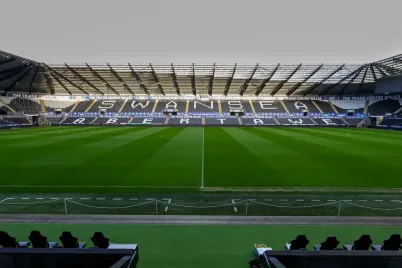
As the countdown to the 18:00 BST kick-off continues, the atmosphere in Arlington is rapidly intensifying. Dallas Stadium, a spectacular feat of modern sporting architecture, provides a fittingly grandiose backdrop for a match of this magnitude. The stifling Texas heat will undoubtedly play a crucial factor, testing the endurance and hydration of every player. Pacing the game, managing energy reserves, and utilising substitutes effectively will be just as critical as the tactical setups.
Every tackle will carry immense weight, every missed opportunity will be magnified, and every goal will be celebrated with unbridled passion. It is the uncompromising, ruthless nature of the World Cup knockouts. For Ivory Coast, it is a chance to roar onto the global stage and bulldoze their way into the Round of 16. For Norway, it is an opportunity to prove that this golden generation can deliver when the spotlight is blindingly bright. One nation will march onwards with dreams of ultimate glory intact, while the other will face the crushing despair of elimination. The world is watching.