The margin for error has definitively vanished at the 2026 FIFA World Cup. As the sprawling group stage concludes and the uncompromising reality of single-elimination football takes hold across North America, the Round of 32 has delivered a genuinely tantalising cross-continental affair. Scheduled for a midnight kick-off (00:00 BST) in the early hours of Friday, 3 July 2026, Portugal will lock horns with Croatia beneath the impressive architecture of the Toronto Stadium. It is a fixture that promises immense tactical intrigue, supreme technical quality, and unrelenting tension. The equation for both nations is entirely straightforward: victory ensures a coveted place in the last sixteen, while defeat guarantees an agonisingly premature journey back across the Atlantic.
Entering this tournament with lofty expectations, neither side can afford to pack their bags at this early juncture. The Iberian nation is desperate to translate their golden generation’s overwhelming potential into tangible global supremacy, seeking the one major trophy that continues to elude their grasp. Conversely, their European opponents are aiming to sustain a remarkable modern legacy. Having famously navigated their way to the 2018 final and the 2022 semi-finals, the team renowned for their tournament pedigree intends to prove that their incredible era on the world stage is far from over.
Navigating the preliminary phase of the competition showcased contrasting elements of the Portuguese arsenal. Placed in Group K, Roberto Martínez’s squad progressed with an unbeaten record, yet their performances oscillated between devastating brilliance and frustrating stagnation. Their campaign commenced in Houston with a fiercely contested 1-1 draw against DR Congo, a match in which an early strike from Paris Saint-Germain midfielder João Neves was ultimately cancelled out before the interval.
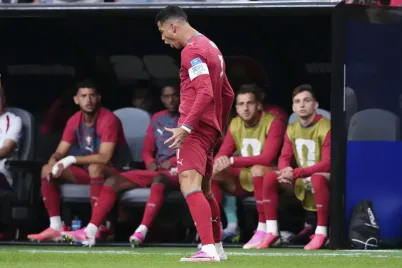
However, any lingering doubts regarding their attacking capabilities were emphatically silenced in their second outing. Returning to the Houston Stadium, they dismantled Uzbekistan in a ruthless 5-0 demolition. That statement victory was spearheaded by their enduring captain, Cristiano Ronaldo. The veteran forward, competing in a record-extending sixth World Cup, netted a clinical brace, supported by further goals from Nuno Mendes and Rafael Leão alongside an unfortunate opposition own goal. Seeking to carry that momentum into their final group fixture in Miami, they instead encountered a remarkably resolute Colombian side. The resulting goalless stalemate highlighted a need for greater creative ingenuity against compact defensive blocks, a puzzle Martínez must solve before Friday’s clash.
While their opponents cruised through without suffering defeat, Zlatko Dalić’s men were forced to engineer a gritty recovery in a highly competitive Group L. Their North American adventure began in disastrous fashion with a humbling 4-2 defeat to familiar rivals England in Dallas. Despite finding the net through Martin Baturina and Petar Musa, glaring defensive vulnerabilities were ruthlessly exploited.
True to their deeply ingrained identity, the seasoned tournament specialists immediately regrouped. Travelling north to Canada, they secured a vital, hard-fought 1-0 victory over a stubborn Panama side, courtesy of a second-half strike from experienced frontman Ante Budimir. With their qualification hopes resting on a knife-edge entering the final matchday against Ghana in Philadelphia, the midfield engine roared to life. Petar Sučić established an early advantage before Nikola Vlašić secured a dramatic 2-1 triumph late in the second half, responding to an equaliser from Derrick Luckassen. It was a classic display of nerve and character from a squad that inherently understands the gruelling mechanics of tournament football.
An intriguing subplot surrounding this knockout tie revolves around logistics and venue familiarity. Dalić’s squad boast a slight psychological advantage in this regard, having already experienced the playing surface and atmospheric conditions at the Toronto Stadium during their crucial victory over Panama. They have acclimatised to the Canadian environment, whereas their Portuguese counterparts face a notable geographical shift. Having completed their group stage duties in the sweltering heat and humidity of Texas and Florida, adapting swiftly to the differing climate and stadium dimensions in Ontario will be an essential, albeit secondary, task for Martínez’s staff.
The battlelines on the pitch present a fascinating clash of footballing philosophies. Under Martínez, the Iberian outfit typically deploys a fluid, possession-based system designed to isolate their explosive wingers against retreating full-backs. The defensive foundation, marshalled by the imperious Rúben Dias, provides a platform for full-backs like João Cancelo and Nuno Mendes to push aggressively forward, creating overloads in the final third. In the centre of the park, the technical mastery of Vitinha and the relentless creative vision of Bruno Fernandes serve as the primary supply lines for a forward unit that possesses a myriad of goalscoring profiles.
In stark contrast, the opposition’s strength undeniably lies in their ability to dictate tempo and carefully control the rhythm of the game from the middle third. Dictating the play is the evergreen Luka Modrić, whose unparalleled capacity to retain possession under severe pressure remains his nation’s most valuable strategic asset. Supported by the dynamic running and intelligent ball-carrying ability of Mateo Kovačić, they excel at suffocating the space required by opposition playmakers and dictating the spatial geometry of the pitch. Defensively, the imposing presence of Joško Gvardiol alongside Josip Šutalo will be crucial in neutralising the aerial and physical threat posed by the opposing forward line, particularly when crosses are delivered from wide areas.
To emerge victorious, the team in red and green must find a reliable method to bypass this congested midfield block, utilising rapid transitions and the blistering pace of Rafael Leão or Pedro Neto on the flanks. Alternatively, their opponents will look to draw the sting out of the game, frustrating the attacking personnel before systematically exploiting spaces left behind the advancing defensive line.
At this gruelling stage of international competition, squad depth and physical conditioning become paramount factors. Both medical departments have been working tirelessly behind the scenes to ensure optimal recovery following the demanding group stage schedule. Remarkably, neither camp has reported any verified, major injury concerns stemming from their respective final group encounters.
Furthermore, both nations appear to have successfully navigated the perilous disciplinary tightrope. Despite a handful of yellow cards being distributed across the opening three matches, including cautions for key figures such as Petar Sučić, Nélson Semedo, and Bernardo Silva, no player has accumulated the required bookings to trigger an automatic suspension for this specific fixture. Consequently, both managers enjoy the luxury of selecting from fully stocked rosters. This comprehensive availability guarantees that the tactical blueprint envisioned on the training ground can be executed without enforced compromise, elevating the prospect of a remarkably high-quality footballing contest.
While the immediate focus remains firmly fixed upon the grass in Toronto, the historical context surrounding this encounter adds a rich layer of narrative tension. Supporters of both nations will undoubtedly recall the fiercely contested Round of 16 clash at the 2016 UEFA European Championship in France. On that occasion, a tense, attritional battle was ultimately decided deep into extra time, propelling the eventual champions forward while leaving the Balkan side heartbroken. Subsequent meetings in the UEFA Nations League have further solidified a highly competitive, modern rivalry between the two footballing institutions.
However, historical records count for little when the referee’s whistle blows in a World Cup elimination match. Every tackle will carry immense weight, every defensive lapse will be heavily magnified, and every goal will be celebrated with unbridled passion. It is the uncompromising, unforgiving nature of knockout football on the grandest stage of them all. One exceptionally talented squad will prolong their World Cup dream and march confidently into the last sixteen, while the other will be left to face the crushing despair of an early departure. The global footballing audience awaits the outcome with bated breath.