The margin for error has definitively evaporated at the 2026 FIFA World Cup. As the sprawling group stage concludes and the uncompromising reality of single-elimination football takes hold, the Round of 32 delivers a captivating cross-continental affair. Scheduled for a late-night kick-off for viewers in the United Kingdom, 04:00 BST on Friday, 3 July 2026, Switzerland will lock horns with Algeria beneath the imposing architecture of BC Place in Vancouver. This fixture pairs a European nation renowned for its tournament consistency against a North African side fuelled by dramatic momentum, offering a straightforward, brutal equation: victory secures a coveted place in the last sixteen, while defeat guarantees an agonisingly premature journey home.
Beyond the immediate sporting stakes, this encounter is defined by an extraordinary managerial subplot. Vladimir Petković, the current architect of the Algerian national team, spent seven highly successful years occupying the Swiss dugout. Guiding the European nation through three major international tournaments, including a memorable run at the 2018 World Cup, his intimate knowledge of the opposition’s footballing infrastructure is unparalleled. Now standing on the opposite touchline, the veteran tactician is tasked with orchestrating the downfall of players he previously nurtured and developed. This deeply personal narrative adds a fascinating psychological layer to a match already brimming with tactical intrigue.
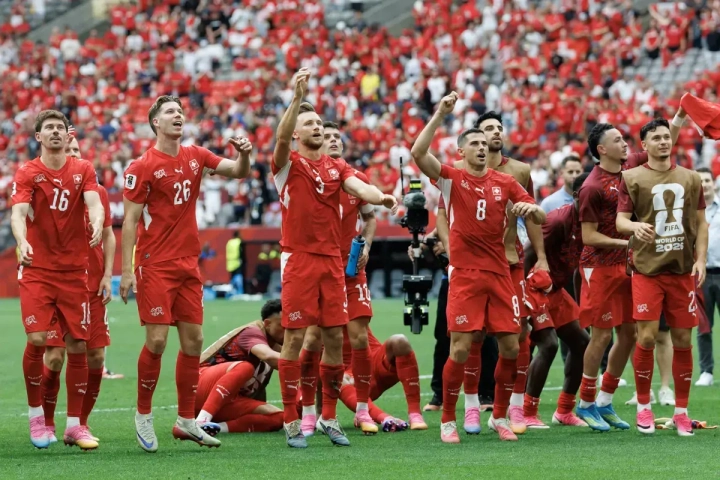
Navigating the preliminary phase with customary efficiency, the Alpine squad progressed as the unbeaten winners of Group B. Murat Yakin’s men amassed seven points, demonstrating a perfectly balanced blend of defensive solidity and ruthless attacking execution. Their North American campaign commenced with a tightly contested 1-1 draw against Qatar, a result that served as a catalyst for immediate tactical improvement. Finding their offensive rhythm, they systematically dismantled Bosnia and Herzegovina in a comprehensive 4-1 victory. Their final group outing in Vancouver saw them embrace the role of party-crashers, securing a highly professional 2-1 triumph over co-hosts Canada. That concluding performance highlighted their capacity to manage hostile atmospheres and grind out results under severe pressure.
Conversely, the route to the knockout bracket for the Desert Foxes has been a chaotic, exhilarating rollercoaster ride. Placed in a fiercely competitive Group J, they secured progression as one of the tournament’s best third-placed finishers. Their journey began in disastrous fashion, suffering a humbling 3-0 defeat at the hands of reigning world champions Argentina. Rather than capitulating, the squad demonstrated immense character to immediately bounce back with a crucial 2-1 victory over Jordan. However, it was their final group fixture against Austria that truly encapsulated their fighting spirit. In a breathtaking six-goal thriller, they secured a 3-3 draw, surviving a late onslaught and a stoppage-time equaliser to book their ticket to the Round of 32.
A significant factor in the European side’s serene progression has been the rapid emergence of Johan Manzambi. The dynamic youngster has been an absolute revelation in the final third, registering three goals and an assist during the group phase despite starting only a single match. His injection of blistering pace and youthful fearlessness has perfectly complemented the established physical presence of striker Breel Embolo. Orchestrating operations from the centre of the park is their talismanic captain, Granit Xhaka. Boasting well over 140 international caps, the midfield general continues to dictate the tempo, disrupt opposition transitions, and provide the indispensable leadership required to navigate high-stakes tournament football.
For the North Africans, the creative burden rests squarely upon the shoulders of Riyad Mahrez. The mercurial winger remains his nation’s most potent offensive weapon, a fact he emphatically underlined by netting a crucial brace during the chaotic draw with Austria. Operating alongside the technical proficiency of Houssem Aouar and Nabil Bentaleb in midfield, the Algerian setup is meticulously designed to feed intelligent runners like Amine Gouiri. While their defensive unit has exhibited occasional vulnerabilities, failing to record a single clean sheet thus far in the competition, their attacking firepower ensures they remain a constant threat capable of turning a match on its head in a fleeting moment of brilliance.
The tactical battlelines present a fascinating clash of footballing philosophies. Operating within a structured 4-2-3-1 framework, Yakin’s outfit will look to establish utter dominance through sustained possession and methodical build-up play. The defensive foundation, anchored by the formidable central partnership of Manuel Akanji and Nico Elvedi ahead of elite goalkeeper Gregor Kobel, will be strictly tasked with neutralising rapid counter-attacks. On the defensive flanks, the experienced Ricardo Rodriguez will face a highly demanding examination against the trickery, vision, and inverted penalty-box runs of Mahrez. This specific duel on the wing could very well dictate the overall flow of the contest.
To emerge victorious, the African side must find a reliable method to bypass the congested midfield block meticulously marshalled by Xhaka and his midfield partner Remo Freuler. Exploiting the wide areas through the aggressive, overlapping runs of full-backs like Ramy Bensebaini and Rayan Aït-Nouri will be essential to stretching the otherwise rigid European defensive structure. If the supply line to their creative central playmakers can be consistently maintained, they undoubtedly possess the raw individual quality to unlock any backline in world football.
At this physically demanding juncture of a major international tournament, squad depth, rotation, and medical management become paramount components of success. Both sets of coaching and medical staff have worked relentlessly behind the scenes in their respective base camps to ensure optimal recovery following the gruelling group stage schedule. Remarkably, considering the intensity of the opening phase, neither camp has reported any verified, major injury concerns stemming from their respective final group encounters.
Furthermore, both nations appear to have successfully navigated the perilous disciplinary tightrope that often plagues teams during the early stages of a tournament. Despite a handful of yellow cards being distributed across the opening three matches, no player has accumulated the required bookings to trigger an automatic suspension for this specific fixture. Consequently, both Yakin and Petković enjoy the rare luxury of selecting from fully stocked rosters. This comprehensive availability guarantees that the tactical blueprints envisioned on the training ground can be executed entirely without enforced compromise, elevating the prospect of a remarkably high-quality footballing contest.
While the immediate focus remains firmly fixed upon the pristine artificial turf of BC Place, the historical context surrounding this encounter is sparse but notable. These two proud footballing institutions have never crossed paths in a competitive international fixture. Their only previous meetings occurred during a pair of international friendlies in the 1980s, both of which resulted in comfortable victories for the European side. However, historical records and friendly encounters count for very little when the referee’s whistle finally blows in a modern World Cup elimination match.
The ultimate prize awaiting the victor is a berth in the prestigious Round of 16, where a formidable test against either Colombia or Ghana looms on the horizon. For the Swiss, advancing represents a baseline expectation; they are aiming to reach the last sixteen for the fourth consecutive occasion, further solidifying their status as perennial knockout stage contenders. For their opponents, the motivation is deeply rooted in rewriting national sporting history. The Desert Foxes are desperately seeking their first-ever victory in the knockout stages of a World Cup, having previously fallen at the Round of 16 hurdle to eventual champions Germany in 2014.
As the 04:00 BST kick-off rapidly approaches, the atmosphere in Vancouver is building towards a magnificent crescendo. The architectural marvel of BC Place provides a fittingly grandiose backdrop for a match of this sheer magnitude. Every tackle will carry immense weight, every defensive lapse will be heavily magnified, and every goal will be celebrated with unbridled, raw passion. It is the uncompromising, unforgiving nature of knockout football on the grandest stage of them all. One exceptionally talented squad will prolong their North American dream, while the other will be left to face the crushing despair of an early departure. The global footballing audience awaits the outcome with bated breath.