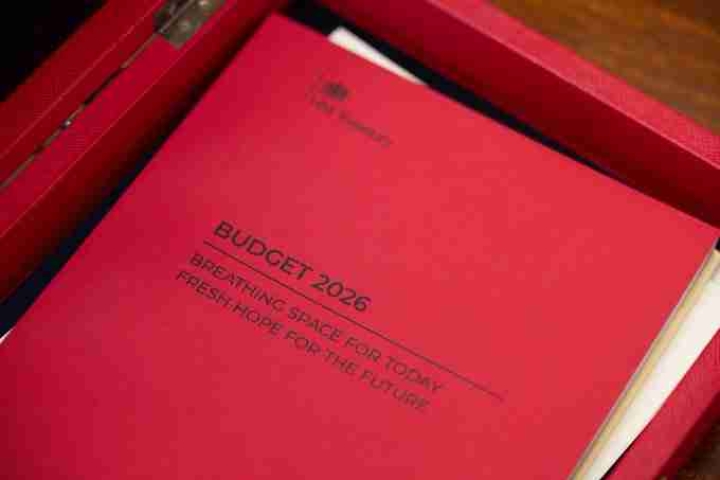
Business leaders have given a mixed verdict on Chancellor John Healey’s first Budget, welcoming a significant cut to business rates for smaller firms while warning that employment costs, taxes and access to finance continue to hold back growth.
Healey used Wednesday’s Budget to increase the threshold at which businesses receive 100% Small Business Rate Relief from a rateable value of £12,000 to £18,000. The change is expected to remove around 70,000 more businesses from paying rates altogether.
The move provided one of the clearest wins for small businesses and high street operators from a Budget delivered against a backdrop of 3.5% inflation, elevated borrowing costs and pressure on the public finances.
The Association of Convenience Stores (ACS) hailed the rates announcement after campaigning for reform throughout the year.
Its chief executive Ed Woodall said: “This is a major step forward in addressing the problems with the business rates system that we have been campaigning on throughout the year.
“Raising the rates relief threshold will mean that thousands of small shops pay no rates at all, protecting jobs and encouraging investment in every postcode.”
ACS said business rates bills across the convenience sector have increased by 79% in two years, reaching £356m in 2026.
Warren Abbey, CEO of SME lender 365 Finance, described the higher threshold as a “big win for the private sector”, particularly for SMEs and high street businesses.
He said: “Business rates don’t account for difficult trading conditions – a quiet month, a difficult winter or a period of weak consumer spending do not make the bill any smaller.
“Predictable operating costs are part of the picture, allowing them to think about refurbishing a premises, investing in equipment, increasing stock or taking on staff, rather than constantly protecting cash reserves against the next bill.”
But the reaction was considerably less enthusiastic when businesses looked beyond rates.
Dr Valentin Boboc, chief economist at the Institute of Economic Affairs, said the Budget took “one step forward and two steps back”.
He said: “Measures to cut energy costs, encourage investment and ease planning restrictions are welcome. But these are undermined by higher taxes, more spending and an increasingly complicated tax system.
“Higher taxes on banks risk discouraging investment, while another minimum wage increase will make hiring more expensive when youth unemployment is already above 15%.”
Employment costs emerged as one of the biggest concerns among those responding to the Chancellor’s package.
Abbey said higher minimum wages would be felt particularly heavily by retailers and hospitality operators already battling significant cost pressures.
“The danger of higher wages is that businesses respond not by growing, but by postponing recruitment, reducing hours, or passing more costs on to customers,” he said.
“Improving employees’ pay is only a positive if there are employers willing and able to hire them.”
Lee Biggins, CEO and founder of CV-Library, also warned that cutting business rates would not solve the wider problems facing employers.
He said: “Reducing business rates is a welcome step, but the Government must not mistake easing one cost pressure for solving wider challenges facing high street businesses.
“The real test of these measures will be whether it gives businesses the confidence to invest and hire, not simply whether it reduces their bills.”
Biggins said there was relatively little in the Budget that directly improved conditions for recruitment, despite retail and hospitality remaining important entry points into employment, particularly for younger workers.
There were similar reservations over access to finance.
Abbey welcomed measures supporting start-up founders and British Business Bank capital for female-led businesses but argued that established SMEs had largely been overlooked.
“The Government seems to have fallen into the trap of directing funding purely to early-stage companies and innovation sectors,” he said.
“Yes, injecting capital into such companies is clearly important, but so is supporting the established independent retailers, cafés, pubs and restaurants that employ local people and keep high streets active.”
Molly Monks of Parker Walsh said rates relief could provide valuable breathing space but warned against viewing it as a solution for struggling businesses.
She said: “For an independent shop, café or salon operating on tight margins, reducing a fixed overhead can free up money for wages, stock or simply keeping the doors open.
“But we need to be realistic about what business rates relief can achieve on its own. Businesses are still facing pressure from energy bills, staffing costs, rent and suppliers, while customers remain sensitive to prices.”
The Budget also contained moves towards greater fiscal devolution, with more tax revenues set to be retained locally.
Abbey said shifting power from Westminster could allow local leaders to invest more effectively in infrastructure, public spaces and regeneration, providing a knock-on benefit for independent businesses.
However, he warned that businesses would need to see whether the long-term promises survived changes in political leadership before becoming convinced.
Elsewhere, Andrew Thurston, customs duty senior manager at MHA, welcomed the temporary reduction in customs duties on 100 supermarket products but questioned how much would ultimately reach consumers.
He said: “Many goods already enter the UK duty-free under free trade agreements or preferential arrangements, and a reduction in import duty does not automatically translate into lower prices at the checkout.”
For small businesses, the immediate Budget verdict was therefore finely balanced: a substantial reduction in one of the high street’s most unpopular fixed costs, set against continued concern over the cost of employing people and the wider tax burden.
As Monks put it: “The real test will be whether these changes leave businesses with enough cash to invest, recruit and build sustainable profits, rather than simply helping them get through another difficult quarter.”