A Historic Night in Florida
The incredible, heart-warming story of the 2026 FIFA World Cup gained another unforgettable chapter on Sunday evening. Staged at the magnificent Miami Stadium in Florida, the highly anticipated Group H fixture between two-time champions Uruguay and tournament debutants Cape Verde ended in a sensational 2-2 draw. Kicking off at exactly 23:00 BST on 21 June 2026, the match provided a breathtaking spectacle of courageous defending, stunning goals, and calamitous defensive errors. While Marcelo Bielsa’s heavily favoured South American side were completely expected to dominate the proceedings and secure maximum points, they were entirely frustrated by a spirited, resilient performance from the African underdogs.
For Cape Verde, the result represents a monumental achievement. Having already stunned European champions Spain with a resolute goalless draw in their opening match, securing another priceless point against a global powerhouse proves their defensive solidity is no mere anomaly. Conversely, Uruguay find themselves facing significant pressure. Having squandered a slender half-time advantage due to catastrophic individual mistakes, La Celeste must now navigate a perilous path to reach the newly expanded Round of 32.
First-Half Fireworks and a Historic Breakthrough
Arriving in North America heavily burdened by expectations, the South American giants were desperate to impose their authority from the opening whistle. Operating in Bielsa’s trademark, high-intensity 4-2-3-1 formation, the midfield trio of Manuel Ugarte, Rodrigo Bentancur, and Federico Valverde sought to monopolise possession and systematically dissect the opposition block. However, Bubista, the astute manager of Cape Verde, had meticulously prepared his side to absorb the pressure in a rigid, compact 4-1-4-1 shape, severely limiting the central spaces.
The physical intensity of the encounter was evident almost immediately. Merely four minutes into the contest, Cape Verdean full-back Sidny Lopes Cabral received an early yellow card for a cynical challenge. Uruguay’s Bentancur soon followed him into the referee’s notebook, cautioned in the 19th minute. This combative atmosphere ultimately set the stage for a truly historic moment.
In the 21st minute, the African nation was awarded a free-kick approximately 34 yards from the Uruguayan goal after a clumsy foul on Telmo Arcanjo. Stepping up to the dead ball, midfielder Kevin Pina unleashed a venomous, low strike. Bypassing a woefully structured, timid two-man defensive wall, the ball squeezed through the gap and nestled beautifully into the bottom corner of the net, leaving veteran goalkeeper Fernando Muslera entirely helpless. The sensational, long-range effort sparked absolute delirium among the Cape Verde supporters, officially marking the country’s first-ever goal at a FIFA World Cup finals tournament.
Uruguay’s Rapid Response
Stunned by the historic setback, the heavily fancied favourites immediately intensified their attacking waves. Despite appearing largely devoid of confidence during the opening half-hour, Uruguay found a route back into the contest through sheer persistence and aerial dominance just before the interval.
In the 44th minute, following a period of sustained pressure, a looping cross was met by Bentancur. His powerful header crashed violently against the post, but the rebound fell perfectly into the path of Maximiliano Araújo. The dynamic winger, who also found the net in his team’s opening fixture, stooped intelligently to nod the ball into the unguarded net, rightfully restoring parity.
The momentum had violently shifted, and La Celeste mercilessly capitalised deep into first-half stoppage time. In the sixth minute of added time (45+6′), another aerial assault proved entirely decisive. Following a chaotic scramble inside the penalty area, Araújo intelligently headed the ball back across the face of the goal. Arriving perfectly on cue, Agustín Canobbio expertly cushioned a close-range finish past goalkeeper Vozinha, completely turning the match on its head and sending Uruguay into the dressing room with a hard-fought 2-1 advantage.
Second-Half Errors and Varela’s Heroics
Recognising the necessity for renewed tactical energy, Bubista immediately turned to his substitutes at the break, introducing Deroy Duarte in place of Arcanjo. Despite the alteration, the South American side appeared completely comfortable and in absolute control of the tempo as the second half commenced.
However, football is a famously unforgiving sport, and individual lapses in concentration can swiftly alter the destiny of a match. In the 57th minute, Uruguayan defender Mathías Olivera was shown a yellow card, a moment that foreshadowed an impending disaster for the European-based centre-back. Just four minutes later (61′), a horrific defensive mix-up gifted the African debutants an unlikely lifeline.
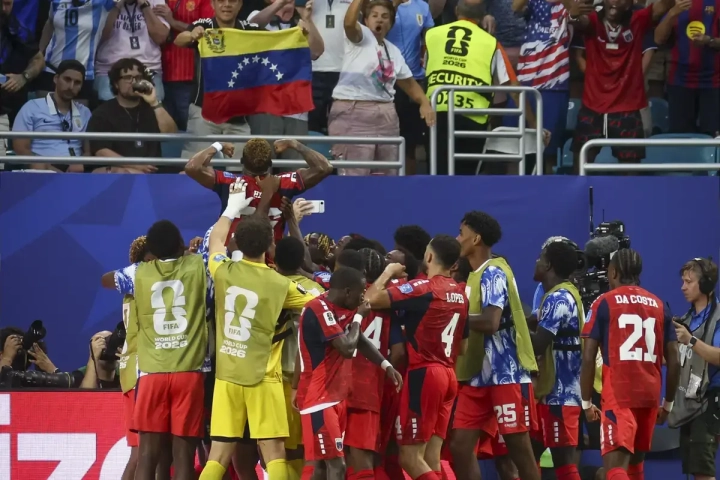
Attempting to casually circulate possession across the defensive line, Olivera played a careless, severely under-hit square pass. Substitute Hélio Varela, who had been introduced to the fray merely three minutes prior alongside Nuno da Costa, demonstrated phenomenal anticipation to aggressively intercept the loose ball. Compounding the catastrophic error, Muslera inexplicably rushed entirely out of his penalty area in a desperate, panicked attempt to clear the danger. Varela easily rounded the stranded goalkeeper and calmly slotted the ball into the completely empty net, dragging Cape Verde right back into the contest at 2-2.
Bielsa Rolls the Dice
Faced with the terrifying prospect of dropping further vital points, Bielsa responded with aggressive, attacking substitutions. In the 69th minute, the highly anticipated introduction of Darwin Núñez injected significant firepower, replacing the ineffective Federico Viñas. Nicolás de la Cruz also entered the midfield, tasked with providing enhanced creative vision in place of Ugarte.
What followed was a relentless, desperate Uruguayan siege. The South Americans completely camped inside the Cape Verde half, launching wave after wave of attacks. Yet, the Blue Sharks defended with herculean resolve. Centre-backs Roberto Lopes and Diney, who was later booked in the 90th minute, produced countless crucial clearances, putting their bodies firmly on the line to protect the precious point.
Vozinha, the 40-year-old goalkeeping veteran whose mother was emotionally watching from the stands after a successful social media campaign funded her travel, was an absolute colossus between the posts. He commanded his area with supreme authority, repeatedly denying the Uruguayan forwards. In the 93rd minute, Canobbio was presented with a glorious, golden opportunity to snatch a dramatic victory after breaking cleanly through on goal. However, under immense pressure, the forward inexplicably lifted his effort high over the crossbar, ensuring the points were ultimately shared.
Group H Implications and The Road Ahead
When the final whistle mercifully echoed across the Miami arena, the contrasting emotions were highly palpable. Hélio Varela was widely celebrated as the unofficial Player of the Match for his sensational, game-changing cameo, completely resurrecting the dreams of his embattled nation. The historic 2-2 draw ensures that Cape Verde remain entirely unbeaten in their maiden World Cup campaign. Sitting on two points, they maintain absolute control over their own tournament destiny. A positive result in their final Group H fixture against Saudi Arabia could miraculously propel the African minnows into the knockout stages, cementing their status as the ultimate tournament dark horses.
Conversely, the result plunges Uruguay into a state of severe anxiety. Having dominated possession and generated numerous high-quality chances, their fundamental inability to ruthlessly kill off the match, combined with shocking defensive frailties, leaves them in a precarious position. Also sitting on two points, Bielsa’s men must now rapidly regroup and prepare for a monumental, do-or-die clash against European heavyweights Spain. Anything less than a flawless, commanding performance against La Roja could see the two-time world champions suffer a disastrous, highly embarrassing early exit from the global stage.
Official Match Facts
Goalscorers:
- Cape Verde: Kevin Pina (21′), Hélio Varela (61′)
- Uruguay: Maximiliano Araújo (44′), Agustín Canobbio (45+6′)
Discipline:
- Cape Verde: Sidny Lopes Cabral (Yellow Card, 4′), Diney (Yellow Card, 90′)
- Uruguay: Rodrigo Bentancur (Yellow Card, 19′), Mathías Olivera (Yellow Card, 57′)
Substitutions – Uruguay:
Minute | Player On | Player Off |
69′ | Darwin Núñez | Federico Viñas |
69′ | Nicolás de la Cruz | Manuel Ugarte |
81′ | Brian Rodríguez | Maximiliano Araújo |
Substitutions – Cape Verde:
Minute | Player On | Player Off |
45′ | Deroy Duarte | Telmo Arcanjo |
58′ | Nuno da Costa | Gilson Tavares |
58′ | Hélio Varela | Garry Rodrigues |
70′ | Laros Duarte | Kevin Pina |
79′ | Yannick Semedo | Jamiro Monteiro |