

The 2026 World Cup, jointly hosted by the United States, Canada, and Mexico, is being promoted by FIFA as a celebration of cooperation, diversity, and the global reach of football.
Yet, according to Professor Emily Ryall at University of Gloucestershire, beneath this optimistic narrative lies a set of ethical concerns that demand closer scrutiny, including some that challenge familiar assumptions about where, and by whom, sport is instrumentalised for political and economic ends.
Professor Ryall, Professor in the Philosophy of Sport, Play and Games, says: “The concept of ‘sportswashing’ has, in recent years, been most readily applied to regimes in the Middle East, Russia, and China.
“FIFA’s decision to award the 2022 World Cup to Qatar attracted sustained criticism for enabling a host nation to leverage football’s global appeal to obscure labour abuses and broader human rights concerns.
“However, to restrict the concept of sportswashing to non-Western contexts risks a form of moral myopia and Western xenophobia.
“The United States is not immune from similar critique. Mega-events such as the World Cup provide fertile ground for political theatre: a platform through which national strength, unity, and superiority can be projected to both domestic and international audiences.
“There is a credible concern that the tournament will be mobilised to distract from contentious policies and ethical controversies, reframing political narratives through the emotive and unifying spectacle of sport.”
Professor Ryall says that alongside the geopolitical considerations sits a more intimate, but no less significant, ethical issue: the exploitation of fans at the World Cup.
In the build-up to the tournament, concerns have been raised about the costs of travel, accommodation and match tickets to supporters of England, Scotland and other teams from around the globe.
The attorneys general of New York and New Jersey have officially launched an investigation into FIFA’s practices, with world football’s governing body subpoenaed to provide information around ticket sales and pricing.
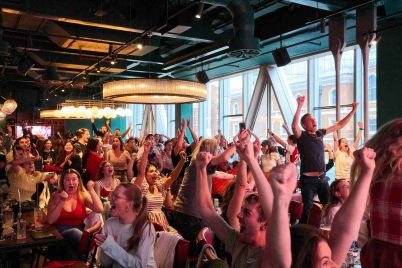
Professor Ryall says: “Football’s emotional power lies in its capacity to generate deep forms of identification and loyalty. Yet this very devotion renders supporters vulnerable.
“Consider, for example, a Scottish fan witnessing their national team qualify for the World Cup finals for the first time in nearly three decades. The financial burden of transatlantic travel, accommodation, and match tickets is substantial, often prohibitively so.
“But the fear of missing a once-in-a-generation moment may compel individuals to spend beyond their means. This raises difficult questions about coercion, not in a formal sense, but in the way that governing bodies capitalise on affective attachments.”
While FIFA framed it as an inclusive move that increased inclusion by broadening global representation, Professor Ryall says the decision to expand the 2026 tournament from 32 to 48 teams intensifies these concerns.
“More teams mean more matches, more broadcast rights, and more commercial opportunities. The expansion risks diluting sporting quality while simultaneously amplifying revenue streams,” she says.
“In this light, the World Cup begins to resemble not merely a sporting competition, but a carefully engineered product designed to maximise profit by leveraging both national pride and fan devotion.
“Football is often described as ‘the beautiful game’, a phrase that gestures toward its aesthetic appeal, its accessibility, and its capacity to unite individuals and communities across the globe.
“The initial vision of a tri-nation World Cup appeared to embody these values, symbolising cooperation and shared celebration across borders, but there is a growing sense that this ideal is being undermined.
“When political image management and commercial exploitation operate beneath the surface, they threaten to erode the very qualities that make football meaningful.
“If the World Cup is to remain a genuine celebration of the sport, rather than a vehicle for power and profit, these ethical tensions cannot be ignored.”