Arsenal were presented with an opportunity to close the gap at the top of the Premier League and responded with a performance that suggested they had every intention of taking it. At a rain-soaked Emirates Stadium, Mikel Arteta’s side comfortably dispatched Everton 2–0, their central defenders supplying the goals on an afternoon when the visitors rarely threatened to disturb the champions’ authority.
Ezri Konsa’s seventh-minute opener established the direction of the contest, while Gabriel’s header midway through the second half provided the security Arsenal’s superiority deserved. Manchester City’s earlier defeat at Aston Villa had opened the door. Arsenal walked through it, moving level with the leaders on 21 points after recording a seventh victory in eight league matches. (skysports.com)
There was plenty here to please Arteta beyond the result. His side returned from their midweek Champions League assignment in Munich, made changes and still maintained control of a Premier League fixture that might have become awkward had Everton been allowed to settle. Arsenal instead imposed themselves early, forced the visitors backwards and spent much of the afternoon deciding where the game would be played.
This was particularly encouraging in the absence of Bukayo Saka. Losing a player of his influence inevitably raises questions about how an attack will function, but Arsenal found sufficient width, movement and invention to keep Everton occupied. Noni Madueke offered a direct threat, Eberechi Eze provided another source of creativity, and the presence of Martin Ødegaard ensured the home side retained a player capable of finding space around a crowded penalty area.
Arteta had spoken respectfully about Everton before the match, describing them as a side whose organisation and individual ability made them difficult opponents.
“They have a really good team,” he said, adding that recent meetings had made clear how demanding this fixture could be. (tribuna.com)
That warning was sensible. The task for Arsenal was to make sure Everton’s organisation did not become the defining feature of the afternoon. An early goal helped enormously.
The breakthrough came from a familiar Arsenal weapon, even if their usual productivity from dead balls had been missing this season. Ødegaard’s corner brought Gabriel into the action, Everton failed to deal with the danger around their goal, and Konsa applied the decisive close-range touch at the far post.
It was the defender’s first goal for Arsenal and ended their wait for a non-penalty set-piece goal this campaign. More immediately, it obliged Everton to contemplate an uncomfortable question: how were they going to recover against opponents already establishing control? (theanalyst.com)
The value of the opener extended beyond the scoreline. Everton could no longer build an afternoon entirely around frustrating Arsenal and waiting for impatience to spread through the stadium. The home side had a lead to work with and could move the ball without feeling that every attack needed to produce an immediate breakthrough.
Arsenal’s pressure also created a steady defensive workload for the visitors. Everton had to compete for the initial delivery, react to the loose ball and then reorganise when possession came back towards their penalty area. Clearing the first danger was frequently only the beginning of the task.
Madueke threatened to extend the advantage, dragging one attempt wide after an excellent turn and sending another into the side-netting. Those moments demonstrated the difficulty of Everton’s position. Protect the centre and Arsenal could work towards the flanks; move across to confront the wide players and space could appear elsewhere.
Nevertheless, Arsenal were not faultless. Their first-half superiority did not become a second goal, and Everton had enough isolated opportunities to remind the home side that control offered no guarantee while the margin remained narrow.
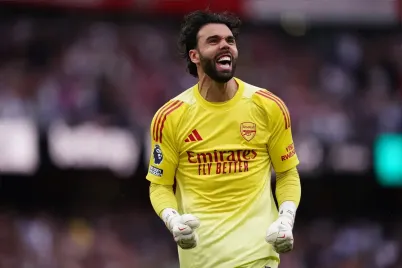
Tyrique George sent a deflected attempt narrowly wide, but the clearest warning arrived just before half-time. Ben White’s weak headed back-pass allowed Thierno Barry an opportunity to equalise, only for David Raya to intervene.
It was an important contribution from the goalkeeper. Arsenal had done considerably more to shape the half, but one lapse had created the possibility of going into the interval level. Raya ensured the mistake did not undo the work ahead of him. (skysports.com)
That moment deserves its place in the assessment of the victory. A comfortable result can make the decisive defensive contributions appear incidental afterwards. At 1–0, this one mattered. Everton had been offered a route back into the match, and Arsenal’s goalkeeper closed it.
The second half brought a different concern when Gabriel landed awkwardly and required attention. With the demands of the season already apparent, the sight of such an influential defender on the ground was unwelcome for Arteta. Gabriel’s ability to continue proved valuable at both ends of the pitch.
Arsenal did not maintain an uninterrupted procession of clear chances after the interval, but neither did they lose their grip on the contest. Everton remained within touching distance on the scoreboard without developing the sustained attacking pressure that might have made that proximity uncomfortable.
The distinction was important. Arsenal still needed another goal, but they were not being driven backwards in pursuit of it.
When the second arrived in the 68th minute, White supplied the cross and Gabriel rose at the far post to head home. The Brazilian had recovered from his earlier discomfort to make the afternoon safe, marking his 200th Premier League appearance with a decisive attacking contribution. (theanalyst.com)
For White, the assist also provided a satisfying response to the first-half error that had nearly allowed Barry to score. His delivery gave Gabriel the chance to finish, and Arsenal finally had the breathing room their overall performance merited.
From there, Arteta could use his bench to manage the closing stages. The available replacements underlined the resources at his disposal, with experienced players able to enter a match whose essential work had already been done.
Everton produced a late warning through a Kiernan Dewsbury-Hall header that went narrowly wide, but Arsenal were never subjected to a prolonged siege. The visitors’ occasional threats remained separate incidents rather than the beginning of a meaningful recovery. (sports.yahoo.com)
The final figures reinforced the balance of the afternoon. Arsenal finished with 58 per cent possession, 20 attempts to Everton’s eight and 12 corners to the visitors’ three. Their expected-goals total of 1.77, against Everton’s 0.48, offered further evidence of where the better opportunities had fallen. (skysports.com)
Yet this victory was about more than accumulating attacking numbers. Arsenal had absorbed the exertions of a European away match, coped without Saka and taken advantage of a rival’s setback. They did not need a spectacular finish from a forward to settle matters because other parts of the team supplied the necessary quality.
There will be more searching examinations of their title defence. Everton did too little with the ball to make this one an exhaustive test. Arsenal will also recognise that leaving the match at 1–0 for so long allowed unnecessary scope for one mistake to change its character.
But the central requirement was fulfilled. The champions started quickly, recovered their set-piece threat, protected their advantage when called upon and added the second goal before the closing stages could become anxious.
On an afternoon when Manchester City had finally stumbled, Arsenal made sure the opportunity counted.