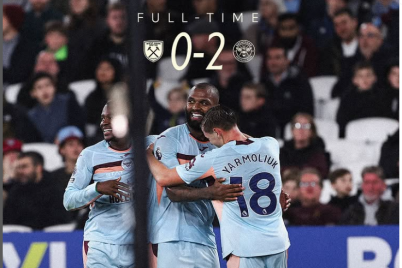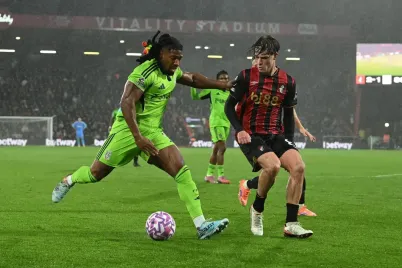
Liverpool came from behind to secure a hard-earned 2-1 victory over Brentford at the Gtech Community Stadium on Saturday, with second-half goals from Víctor Muñoz and Alexander Isak deciding a dramatic contest that the home side finished with nine players.
Keane Lewis-Potter’s header had put Brentford ahead shortly before half-time, but Yehor Yarmoliuk’s dismissal in first-half stoppage time transformed the challenge facing Keith Andrews’ team. Liverpool eventually made their extra player count, overturning the deficit in an eight-minute spell before Vitaly Janelt’s late sending-off added to the hosts’ frustration.
The result ended Brentford’s unbeaten start to the Premier League campaign and gave Andoni Iraola’s Liverpool an important response to their previous league defeat against Manchester City. However, the visitors had to work for their recovery, and injuries to Dominik Szoboszlai and Jeremie Frimpong ensured the afternoon brought concerns alongside the satisfaction of three points.
There were encouraging signs in the way Liverpool’s attacking players combined. Florian Wirtz created the equaliser, Bradley Barcola supplied Isak for the winner, and the returning striker demonstrated the composure that ultimately separated the sides. Yet wasteful finishing and an uncertain closing spell prevented the visitors from enjoying a comfortable conclusion.
For Brentford, the disappointment was sharpened by the position they had established before the first red card. They had competed strongly, created opportunities and taken the lead against opponents still searching for consistency. Their performance after the interval also showed determination, but playing more than half the match with a numerical disadvantage placed an enormous strain on their hopes of protecting that advantage.
The opening exchanges reflected the confidence with which Andrews’ players approached the fixture. Early corners immediately tested Liverpool’s organisation and allowed the home supporters to contribute to an energetic atmosphere. Brentford were prepared to challenge for territory and second balls, while Liverpool attempted to establish their own passing rhythm.
Szoboszlai and Alexis Mac Allister both tried their luck from distance without finding the target. Those attempts offered an early indication that the visitors would need greater precision if they were to turn promising possession into a meaningful advantage.
At the other end, Michael Kayode combined with Dango Ouattara down the right before unleashing an effort that required an important intervention from Jérémy Jacquet. The defender diverted the ball away from goal with Alisson moving in the opposite direction, preventing a potentially dangerous situation from becoming an early setback.
Jacquet’s involvement would become a recurring feature of the afternoon. Against Brentford’s movement, deliveries and physical presence in attacking areas, the Liverpool defender had little opportunity to settle into a quiet game. His defensive work helped the visitors remain level while the contest was still being played on even terms.
Barcola provided Liverpool with a threat through his speed and direct running. One opportunity arrived when he seized possession and raced towards goal, only to send an attempted chipped finish wide after lifting the ball over Caoimhín Kelleher.
It was an opening that Liverpool would have wanted to convert, particularly in an away match where Brentford were giving them little room for complacency. Barcola had done the difficult work of reaching a dangerous position, but the final touch failed to reward the quality of his approach.
That combination of promise and frustration continued throughout his performance. The winger repeatedly looked capable of opening the home defence, yet his finishing allowed Brentford to remain within reach. His contribution would still prove decisive, although it came through creating a goal rather than scoring one himself.
The hosts were also capable of producing fluent attacking moves. Their willingness to advance quickly through wide areas gave Liverpool different problems from those posed by set pieces, with Ouattara looking to supply Igor Thiago and the striker demanding close attention inside the penalty area.
One move required Jacquet to intervene as Thiago attempted to meet a low delivery. Another opportunity saw the Brentford forward head over after Kristoffer Ajer directed a free-kick back into a dangerous area. These moments helped establish that the home side’s ambition extended beyond simply containing Liverpool.
The visitors then suffered the first of their injury setbacks. Szoboszlai was unable to continue and made way for Trey Nyoni in the 32nd minute, bringing an early end to his return to the starting lineup.
Losing a midfielder before half-time disrupted Liverpool’s plans and handed Nyoni a demanding assignment. He entered a match in which neither team had established control and where the tempo required immediate concentration. His introduction also became the first example of Liverpool needing to draw on younger players as unexpected circumstances reshaped their afternoon.
The contest became increasingly eventful as the interval approached. Liverpool initially appeared to have earned a penalty when Ouattara challenged Mac Allister inside the area. Referee John Brooks pointed to the spot, briefly presenting the visitors with an opportunity to take the lead.
A video review changed that decision. Replays showed that Ouattara had touched the ball, and Brooks overturned the penalty after consulting the pitchside monitor. Brentford had survived a significant moment, while Liverpool were left to reset after believing they had secured a potentially decisive opening.
The importance of that reprieve increased when Lewis-Potter put the hosts ahead in the 44th minute. Thiago supplied the cross, reversing his usual role as the player expected to finish the move, and Lewis-Potter timed his arrival to head beyond Alisson.
It was an effective combination of delivery and movement. Liverpool were unable to prevent the cross from producing a clean aerial opportunity, and the finish gave Brentford a lead at a stage when there was little time remaining before the break.
For the visitors, the shift was frustrating. Within a short passage of play, they had gone from anticipating a penalty to conceding the opening goal. Brentford, meanwhile, appeared to have created the ideal position from which to approach the second half.
That advantage was undermined by Yarmoliuk’s confrontation with Jacquet as the players waited for a corner deep into first-half stoppage time. Following a review, Brooks dismissed the midfielder for violent conduct after he moved his head towards the Liverpool defender.
The incident changed the balance of the match before either manager could deliver his half-time instructions. Brentford still held the lead, but the task of defending it had become substantially more difficult. Liverpool now had an extra player and an entire half in which to exploit the spaces that could emerge.
Andrews responded by introducing Kevin Schade and Mamadou Sangaré for Ouattara and Mathias Jensen at the interval. The changes reflected the need to adjust Brentford’s shape while retaining enough pace to threaten on the break.
Keeping an attacking outlet was essential. If the hosts surrendered all ambition and allowed Liverpool to remain permanently around their penalty area, the pressure would become increasingly difficult to withstand. Schade’s speed offered a way to make the visitors consider what might happen when possession changed hands.
Iraola also made a half-time substitution, introducing Frimpong for Ronald Araújo. That adjustment was quickly overtaken by another injury, with Frimpong forced off shortly after his arrival.
Rio Ngumoha entered the match, while Muñoz took on responsibilities at right-back. The reshuffle required Liverpool to adapt again, adding another complication to their attempt to recover the deficit.
Although the numerical advantage gave the visitors a clearer route back, the match still demanded patience. Brentford could defend compactly, protect central spaces and try to force Liverpool into hurried decisions. Moving the ball without purpose would have done little to weaken that resistance.
Mac Allister tested Kelleher with an effort from outside the area, forcing the goalkeeper into a diving save. Virgil van Dijk also had an opportunity following a short corner, but his volley bounced wide.
The equaliser eventually arrived in the 62nd minute through Muñoz. Wirtz released him down the right, and the Spaniard moved inside Lewis-Potter before striking left-footed beyond Kelleher.
It was a confident finish from a player whose role had changed during the half. Despite being required to contribute from a deeper position, Muñoz retained the attacking instincts to advance at the right moment and make his opportunity count.
Wirtz’s pass was equally significant. Breaking down a reduced defence requires more than simply having additional possession; the ball must reach an attacking player before the opposition can close the available space. His delivery gave Muñoz the platform to turn a promising movement into a goal.
Liverpool were now level, and Brentford faced a fresh dilemma. Continuing to defend deep might preserve a point, but any attempt to push forward could leave further openings for an increasingly influential visiting attack.
Eight minutes later, Isak completed the turnaround. Mac Allister delivered towards the far post, Barcola redirected the ball into the striker’s path, and Isak controlled before driving his finish home.
The goal brought together several of Liverpool’s most important attacking qualities. Mac Allister provided the delivery, Barcola supplied the supporting touch and Isak applied the decisive composure. Having missed the previous league match through injury, the striker made his return matter.
Taking the lead should have allowed Liverpool to approach the remaining stages with greater authority. Instead, the contest remained uncomfortable because they failed to add the third goal that would have given them breathing space.
Brentford continued to compete and created a chance for Thiago to respond from close range. Under pressure, he was unable to turn the opportunity into an equaliser, allowing Liverpool to retain their narrow advantage.
That moment demonstrated the danger of leaving the result unresolved. Despite being a player down, the hosts still possessed the determination and attacking presence to threaten. A single successful move could have undone Liverpool’s recovery.
Barcola almost extended the lead when his curling effort struck the crossbar. It was another example of the winger reaching a position from which he could influence the scoreline, but the ball again stayed out.
The visitors also failed to make the most of late counterattacking opportunities. Their decisions in those situations allowed Brentford to remain hopeful rather than forcing the home side to accept that the match had slipped beyond them.
Janelt’s second yellow card in added time reduced Brentford to nine players. His foul on Ngumoha ended his involvement and further weakened the hosts during the final moments, although the first dismissal had been the more significant turning point.
Afterwards, Iraola welcomed the result while identifying areas that required improvement. He considered the victory particularly valuable because of Brentford’s strength at home and was pleased with the patience Liverpool showed as they worked towards the comeback.
His frustration centred on the period after Isak’s winner. The Liverpool manager felt his players had found good positions and attacked with purpose while chasing the game, only to become less assured once they had something to protect.
He also believed the visitors should have used their counterattacks more effectively. Those missed opportunities left the result in doubt and created unnecessary pressure during a match in which Liverpool had already overcome several difficulties.
Barcola nevertheless received support from his manager. Iraola recognised the chances the winger had missed but remained encouraged by his ability to keep reaching dangerous areas. The assist for Isak also ensured that his performance contained a decisive contribution.
The Liverpool head coach raised a separate concern about consistency in video review following the overturned penalty. While accepting that Ouattara touched the ball, he questioned how the threshold for intervention compared with an earlier incident involving his team.
Andrews’ reaction combined disappointment with pride. He felt Brentford had grown into the first half, developed their rhythm and established a promising position before the red card changed the demands of the contest.
The home manager was particularly encouraged by his players’ refusal to stop competing. Even after falling behind, they continued to pursue opportunities and ensured Liverpool could not relax.
There was also recognition that Yarmoliuk needed to manage his confrontation better. Whatever the circumstances surrounding the interaction, Brentford were left to cope with the consequences for the remainder of the afternoon.
Liverpool departed with three points earned through persistence, adaptability and two effective finishes. Brentford were left reflecting on a lead they could not protect and disciplinary mistakes that made an already difficult assignment considerably harder. Muñoz opened the route back, Isak completed the recovery, and Liverpool did enough to turn an unsettled afternoon into an important victory.