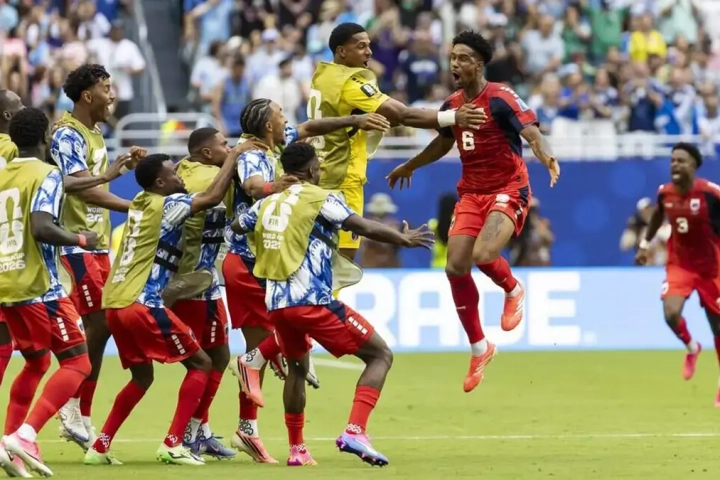
The scorching summer heat of Texas will provide the backdrop for a truly compelling Group H finale at the 2026 FIFA World Cup, as tournament debutants Cape Verde prepare to face a desperate Saudi Arabia. Scheduled to kick off at exactly 01:00 BST on Saturday, 27 June 2026, this highly anticipated fixture will unfold under the bright lights of the Houston Stadium. Following an unpredictable opening two rounds of matches that have left the group wide open, the stakes could scarcely be higher. For the African archipelago nation, a single victory stands between them and a historic progression to the knockout phases. Conversely, the Asian powerhouses arrive in North America’s fourth-largest city knowing that anything less than maximum points will result in a premature flight back to the Middle East.
Group H Permutations and the Current Landscape
Navigating the complexities of the expanded 48-team tournament, Group H has delivered a fascinating, heavily contested battle for qualification. Pre-tournament favourites Spain currently lead the group with four points, having dismantled Saudi Arabia after being surprisingly held by Cape Verde. The Blue Sharks sit level on two points with two-time champions Uruguay, sharing an identical goal difference following their recent 2-2 stalemate. Saudi Arabia props up the group with a solitary point.
The permutations heading into this crucial decider are straightforward yet punishing. For Cape Verde, a victory over the Green Falcons will guarantee their progression to the newly expanded Round of 32, securing a top-two finish or advancing as one of the best third-placed teams. Even a draw could potentially prove sufficient depending on the outcome of the simultaneous fixture between Spain and Uruguay. For Saudi Arabia, the mathematical reality is stark: win or face elimination. Claiming three points would propel them to four points, putting them in a prime position to advance and keep their World Cup dreams vividly alive.
The Blue Sharks’ Unbelievable Cinderella Story
Guided by the astute tactical mind of Pedro Leitão Brito, universally known as ‘Bubista’, the Cape Verdean national team has rapidly become the darling of the 2026 World Cup. Representing an island nation of fewer than 600,000 inhabitants—the third-smallest country to ever qualify for the global showpiece—they have fearlessly defied the odds. Their campaign commenced with a shock 0-0 draw against second-ranked Spain, a match that instantly catapulted 40-year-old goalkeeper Vozinha into the international spotlight following a breathtaking seven-save performance.
Rather than resting on their laurels, the Blue Sharks proved their attacking capabilities in their second outing against Uruguay. In a thrilling 2-2 encounter, defensive midfielder Kevin Pina etched his name permanently into the national history books by scoring Cape Verde’s first-ever World Cup goal. The squad, heavily composed of dual-nationality players meticulously assembled by Bubista, has displayed a remarkable sense of unity. Veterans such as captain Ryan Mendes and defender Roberto ‘Pico’ Lopes have provided essential leadership, anchoring a team that plays with absolute freedom and a complete absence of fear.
Saudi Arabia’s Desperate Survival Mission
Standing across the tactical divide is a Saudi Arabian squad fighting fiercely to salvage a campaign that has quickly slipped out of their control. Following the departure of Hervé Renard, the Saudi Arabian Football Federation appointed Greek tactician Georgios Donis in April to lead the national team. Donis, a deeply respected figure in Saudi football following highly successful domestic spells with clubs like Al Hilal, was tasked with bringing immediate stability.
The Green Falcons began their tournament brightly, securing a hard-fought 1-1 draw against Uruguay in Miami to raise hopes of a deep run. However, the subsequent encounter with Spain in Atlanta proved to be a harsh reality check. A crushing 4-0 defeat exposed glaring defensive frailties and severely dented their confidence. To avoid a disappointing early exit, Donis must rapidly rebuild his squad’s psychological resilience. The Middle Eastern giants are aiming to reach the knockout stages for only the second time in their history, hoping to replicate the famous 1994 run that coincidentally occurred the last time the United States hosted the tournament.
Anticipated Tactical Battlegrounds
When analysing the granular details of this impending matchup, a fascinating contrast of overarching footballing philosophies emerges. With progression on the line, the tactical chess match between Bubista and Donis will be completely decisive.
Area of the Pitch | Cape Verde Key Figure | Saudi Arabia Key Figure | Tactical Significance |
The Penalty Box | Vozinha | Firas Al-Buraikan | An elite shot-stopping veteran against a potent, dynamic forward. Vozinha must command his area to frustrate the desperate Saudi attackers. |
Central Midfield | Kevin Pina | Mohamed Kanno | A brutal battle for physical dominance and transition control. Pina will look to anchor the midfield, while Kanno is tasked with driving the ball forward. |
The Flanks | Ryan Mendes | Saud Abdulhamid | Mendes’s direct, creative dribbling against Abdulhamid’s aggressive overlapping runs. Controlling the wide channels is absolutely paramount for both sides. |
Key Tactical Themes and Individuals
Saudi Arabia must dictate the tempo from the opening whistle. Donis traditionally favours highly disciplined, compact structures, but the dire group standings dictate that the Green Falcons must commit bodies forward. The creative burden will fall immensely upon the shoulders of their talismanic captain, Salem Al-Dawsari. The reigning Asian Footballer of the Year possesses the technical wizardry required to unlock stubborn defensive blocks, and his link-up play with striker Firas Al-Buraikan will be essential to breaching the Cape Verdean lines.
Conversely, the African debutants will likely embrace a slightly more pragmatic, reactive posture. Acknowledging their opponents’ urgent need to attack, Bubista will instruct his team to remain structurally compact, deploying a rigid defensive block to completely congest the central areas. The tactical focus will remain on systematic frustration, challenging the Saudis to find a route through a heavily populated penalty area. Once possession is successfully recovered, the blistering pace of Dailon Livramento and the technical guile of Mendes will be weaponised to launch rapid, devastating counter-attacks into the vast spaces left behind by the advancing Saudi full-backs.
Team News and Squad Availability
Preparation for this monumental Group H finale has fortunately been largely unhindered by severe medical crises within either camp. Following their physically demanding encounters against Uruguay and Spain, both nations have completely avoided any fresh injury concerns. Furthermore, neither squad is burdened by lingering disciplinary suspensions, affording both Bubista and Donis the luxurious flexibility of selecting their absolute strongest starting elevens.
For the African challengers, Columbus Crew defender Steven Moreira has played every single minute of the campaign thus far and is expected to retain his crucial starting role in the backline. For the Asian representatives, Donis faces a difficult decision regarding his defensive setup after the heavy defeat to Spain, potentially calling upon experienced centre-backs Hassan Kadesh or Ali Lajami to restore much-needed stability.
Historical Context and Tournament Storylines
Encounters between these two distinct footballing cultures are entirely unprecedented on the senior international stage. Saturday morning’s clash in Texas marks the inaugural competitive meeting between Cape Verde and Saudi Arabia, offering both proud nations a completely blank canvas upon which to write their World Cup legacy.
The overarching narrative surrounding the fixture is deeply compelling. Cape Verde is currently writing one of the greatest underdog stories in the modern history of international football. A victory would not only mark their first-ever win at a World Cup but would also cement their status as giant-killers on the global stage. On the other hand, Saudi Arabia represents an established footballing power from the Asian confederation desperately seeking to validate their massive recent domestic investments by achieving tangible success on the international front.
The Final Word
As the vibrant, deeply passionate supporters converge on the magnificent modern architecture of the Houston Stadium, the extensive theoretical planning and exhaustive video analysis will immediately give way to raw, competitive tournament survival. For the seasoned Asian heavyweights, the fixture provides a golden, unmissable opportunity to salvage a faltering campaign, secure a vital qualification spot, and reward their travelling contingent with a memorable performance.
For the ambitious African debutants, it represents one final, monumental chance to defy the overwhelming odds and execute a historic progression on the grandest global stage. Millions of fans tuning in around the world can readily anticipate an intriguing, fiercely contested encounter that perfectly encapsulates the unforgiving, dramatic essence of the FIFA World Cup. With the punishing reality of elimination looming menacingly over the pitch, a conservative, tentative approach will benefit absolutely no one as the curtain prepares to fall on Group H.