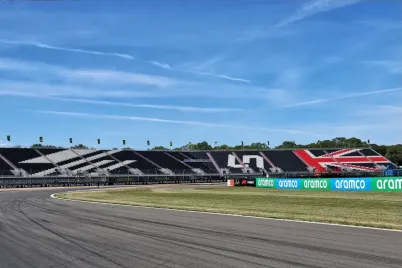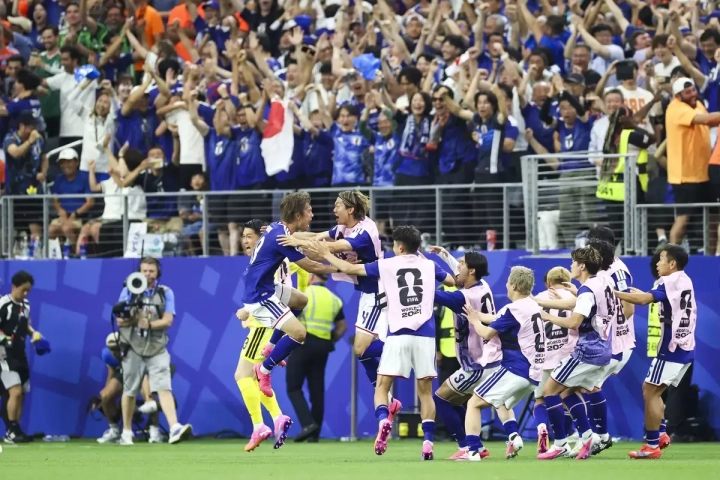
The 2026 FIFA World Cup has already delivered its fair share of spectacular drama, but few storylines rival the sudden managerial upheaval currently engulfing the Tunisian camp. Facing potential early elimination from Group F, the North African side prepares to take on a highly cohesive and dynamic Japan outfit. This pivotal encounter is scheduled for Sunday, 21 June 2026, with a bright and early kick-off time of 05:00 BST. The clash will unfold under the floodlights at the magnificent Monterrey Stadium in Monterrey, Mexico, where the sweltering heat and soaring humidity will undoubtedly play a critical role in the proceedings. With both nations desperately chasing their first victory of the tournament to solidify their respective knockout aspirations, the margin for error has vanished completely.
A Managerial Earthquake in the North African Camp
Navigating a World Cup group stage is inherently treacherous, but experiencing a mid-tournament change in leadership is an extraordinary scenario. Following a disastrous 5-1 capitulation to a Graham Potter-led Sweden in their opening fixture, the Tunisian Football Federation acted with ruthless swiftness, dismissing head coach Sabri Lamouchi. The heavy defeat was seemingly the final straw, coming hot on the heels of a troubling 5-0 thrashing at the hands of Belgium in their final pre-tournament friendly earlier in June. To arrest this alarming defensive slide, the hierarchy has turned to a man synonymous with major international tournament upsets: Hervé Renard.
The experienced Frenchman, universally celebrated for masterminding Saudi Arabia’s historic victory over Argentina four years ago in Doha, faces a truly monumental task. His immediate priority will be restoring the psychological fortitude of a squad that currently looks entirely bereft of confidence. The recent defensive collapse is particularly perplexing given their flawless qualification campaign, during which the Carthage Eagles did not concede a single goal across ten demanding matches. Renard has precious few days on the training pitch in Nuevo León to recalibrate a backline that was repeatedly carved open by Swedish attackers. Imposing his trademark structural discipline and instilling a renewed sense of collective belief are absolute non-negotiables if they are to survive their upcoming North American test.
Samurai Blue Seeking to Build Crucial Momentum
Standing in stark contrast to the turbulent atmosphere surrounding their opponents, the Japanese camp projects a powerful aura of serene focus and calculated ambition. Guided once again by the tactically astute Hajime Moriyasu, the Asian heavyweights commenced their Group F campaign with a highly encouraging 2-2 draw against a formidable Netherlands side. Earning a share of the spoils against the Dutch firmly demonstrated that their giant-killing exploits in Qatar—where they famously dispatched both Germany and Spain—were no mere fluke.
Moriyasu has meticulously cultivated a squad that seamlessly blends relentless physical work rate with intricate technical precision. The ability to smoothly transition between periods of sustained possession and rapid, vertical counter-attacks makes them a uniquely dangerous proposition on the global stage. Against the Netherlands, the Samurai Blue proved they can comfortably trade blows with Europe’s elite, fighting back from moments of adversity with remarkable composure. However, heading into the Monterrey fixture, the overarching expectation shifts slightly. Japan will likely be tasked with dismantling a deeply entrenched defensive block, a tactical challenge that requires immense patience, clever off-the-ball movement, and clinical finishing in the final third.
Key Tactical Themes and Player Focus
Analysing the tactical landscape of this fixture presents a fascinating clash of immediate priorities. For the newly installed Renard, tournament survival dictates a rapid return to absolute basics. Expect a rigid, compact formation explicitly designed to congest the central channels and deny Japan’s highly creative midfielders the space they naturally crave. Full-backs, notably Ali Abdi on the left flank, will likely be instructed to prioritise defensive solidity over overlapping offensive runs. Abdi is tasked with the gruelling job of shackling Japan’s dynamic wide players, and his combative approach will be vital. However, he must carefully temper his aggression to avoid accumulating unnecessary cards in an incredibly high-stakes environment.
Further forward, Hannibal Mejbri remains absolutely central to Tunisia’s creative ambitions. The combative midfielder possesses the tenacity and vision required to launch swift counter-attacks, provided he receives adequate support. Renard is also widely tipped to reshuffle his attacking options, with Firas Chaouat and Elias Achouri pushing hard for starting berths after featuring from the bench during the disappointing opening defeat.
Breaking down this anticipated low block will require Japan to heavily utilise the width of the pitch and ruthlessly exploit brief transitional moments. The Asian champions have suffered a notable setback with the retirement of influential holding midfielder Wataru Endo due to a persistent foot injury, but Ko Itakura has seamlessly stepped up to assume the captain’s armband, providing a disciplined platform at the back.
Operating within Moriyasu’s preferred 3-4-2-1 system, Takefusa Kubo is the undisputed creative fulcrum. Drifting intelligently in the double ten role behind central striker Ayase Ueda, Kubo gives Japan genuine guile and unpredictability in the final third. His movements must be tracked diligently by the Tunisian midfield trio. Additionally, Celtic forward Daizen Maeda and dynamic winger Keito Nakamura offer terrifying pace and directness, ensuring that the Tunisian defensive line will be subjected to a relentless, exhausting physical examination.
Anticipated Battlegrounds | Tactical Significance |
Wide Channels | Japan’s wingers versus Tunisia’s full-backs. The ability of Nakamura and Maeda to isolate defenders will stretch the backline and create gaps. |
Central Midfield | Control of the tempo. Japan aims for quick, fluid passing combinations; Tunisia seeks physical disruption and vital interceptions. |
The Penalty Box | Ayase Ueda against the Tunisian centre-backs. Ueda’s physical presence and movement will rigorously test Renard’s newly organised defensive structure. |
Historical Context and Previous Encounters
Encounters between these two distinct footballing cultures offer an intriguing historical backdrop. Japan holds a distinct psychological advantage, having won the majority of their recent clashes. The Samurai Blue secured a comfortable 2-0 victory in an international friendly as recently as October 2023. Furthermore, older fans will undoubtedly recall their meeting during the 2002 World Cup group stage, where Japan also triumphed by a 2-0 scoreline on home soil. While those historical footnotes provide little tangible insight into the modern tactical landscape, they highlight an overarching historical pattern that the Carthage Eagles are absolutely desperate to shatter.
Group F Permutations and the Road Ahead
The mathematical reality of Group F currently leaves incredibly little room for interpretation or error. For the North Africans, simply avoiding defeat is utterly paramount. A second consecutive loss would virtually guarantee their premature elimination from the 2026 World Cup, brutally extending their frustrating historical record of never having progressed beyond the group stages in seven separate tournament appearances. Securing even a gritty, hard-fought draw would keep their faint hopes alive heading into a daunting final fixture against the Netherlands in Kansas City.
For the Japanese contingent, securing all three points is considered entirely essential for their grand ambitions of topping the group. Earning a theoretically more favourable draw in the newly introduced Round of 32 remains the ultimate objective. With a demanding final group match against current group leaders Sweden looming on the horizon, Moriyasu knows that capitalising on Tunisia’s current instability is a priceless, non-negotiable opportunity. Four points from their opening two matches would provide a massive psychological boost, allowing them to approach the group finale with measured, unwavering confidence.
Building Anticipation for Kick-Off
As the breathless countdown to kick-off rapidly accelerates, the magnificent Monterrey Stadium is perfectly primed to host a deeply compelling narrative. The extensive theoretical planning and exhaustive video analysis will immediately give way to raw, competitive survival. Will the legendary “new manager bounce” successfully materialise for a Tunisian squad desperately searching for their identity under Hervé Renard? Or will Japan’s slick, highly cohesive tactical machinery ruthlessly exploit the existing cracks to take a massive, decisive step toward the knockout rounds? Millions of passionate fans watching around the globe will soon witness whether sheer structural discipline can thwart elite technical brilliance in a high-stakes fixture that perfectly encapsulates the unforgiving, dramatic essence of international football.