

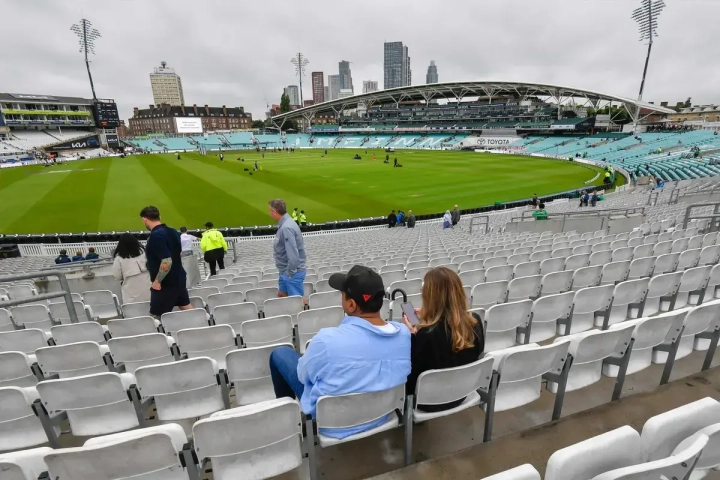
Under the imposing, historic gasometers and bathed in the radiant evening sunshine of South London, the Men’s Competition of The Hundred delivered another captivating chapter on Wednesday, 29 July 2026. Commencing precisely at 18:30 BST at The Kia Oval, an inspired London Spirit outfit resoundingly silenced the partisan home crowd by securing a dominant seven-wicket triumph over MI London. Anchored by an astonishing, match-defining display of sustained power-hitting from prodigious talent Lhuan-dre Pretorius, the visitors comfortably hauled down a highly competitive target, finishing on 165 for three to seal the fixture with 11 deliveries remaining. The comprehensive victory offered a desperately needed revitalisation to a campaign that had previously stuttered, whilst exposing concerning tactical vulnerabilities within the hosts’ defensive structure.
The Toss and Strategic Parameters
The tactical foundation of the evening was established at the coin toss, where London Spirit captain Liam Livingstone called correctly and immediately elected to field first. Evaluating a pristine, heavily rolled surface that promised consistent bounce alongside warm, 28-degree Celsius ambient temperatures, the visiting leadership group identified an early opportunity to apply scoreboard pressure. Guided by the vast strategic acumen of head coach Andy Flower, the visitors sought to rigidly restrict the hosts during the fielding restrictions of the 25-ball powerplay. Conversely, MI London, operating under the tutelage of highly decorated head coach Kieron Pollard and led on the field by captain James Vince, embraced the challenge of setting an imposing total, implicitly trusting their explosive batting lineup to dictate terms in front of their home supporters.
MI London’s Formidable Foundation
Tasked with establishing a dominant platform, the MI London batting order immediately encountered a highly disciplined visiting bowling attack. Opening batter Will Jacks assumed the crucial, overarching responsibility of anchoring the innings, navigating the early hostile exchanges with a flawless blend of aggressive intent and measured rotation of the strike. Jacks displayed immense technical fortitude, launching consecutive boundaries and severely punishing anything marginally loose on his pads. However, his prominent partners found the going significantly tougher against the new ball. James Vince struggled to find his customary fluency, eventually departing for a laboured 26 from 20 balls after being safely caught by David Willey off the bowling of James Coles. The subsequent arrival of the explosive Nicholas Pooran promised fireworks, but the West Indian wicketkeeper-batter was swiftly undone, managing merely three runs before falling victim to the relentless pace of Jamie Overton.
Overton’s Masterclass and Rutherford’s Late Assault
As the innings transitioned steadily through the middle phase, the compounding pressure applied by the Spirit’s varied bowling unit entirely prevented the hosts from establishing any rhythmic, momentum-shifting partnerships. The deeply influential Jamie Overton emerged unequivocally as the undisputed standout performer with the ball. The towering seamer delivered an absolute masterclass in restrictive pace bowling, expertly varying his lengths and utilising sharp bouncers to continually bewilder the middle order. Overton concluded his maximum allocation of 20 balls with exceptional, match-defining figures of three wickets for 30 runs.
Nevertheless, Sherfane Rutherford provided a desperate, late injection of violent momentum for the hosts. The powerful left-hander unleashed a brutal assault in the dying moments, blasting an incredible 41 from merely 19 deliveries. His rapid-fire knock, punctuated by two fours and four towering sixes, single-handedly propelled MI London to a highly competitive 164 for five from their allotted 100 balls. Jacks remained the top scorer with an elegant 65 from 44 deliveries, leaving the fielding side with a monumental chase on their hands.
London Spirit’s Relentless Run Chase
Defending a substantial total of 165 necessitated an absolutely flawless, highly aggressive start from the MI London bowling attack. They desperately required immediate breakthroughs to artificially induce panic within the visiting dressing room. Unfortunately for Pollard’s side, the London Spirit top order arrived at the crease with an entirely different, heavily aggressive script prepared. The opening pair of Lhuan-dre Pretorius and Jonny Bairstow embarked upon a breathtaking, unyielding assault during the vital 25-ball powerplay. Capitalising efficiently on minor errors in length and manipulating the field placements with absolute surgical precision, the duo constructed a blistering 63-run partnership in merely 33 deliveries. Bairstow provided a characteristically fiery cameo, striking four boundaries and a massive six in his rapid 23 from 12 balls before eventually falling to the raw pace of Olly Stone.
The Pretorius Phenomenon
The abrupt departure of the veteran England international did absolutely nothing to stem the relentless flow of runs, entirely due to the sheer, unadulterated brilliance of Pretorius. The young batter completely seized total control of the narrative, producing a breathtaking exhibition of elite stroke play that virtually rendered the required run rate obsolete within the opening exchanges. Pretorius bypassed the boundary ropes entirely, dealing almost exclusively in magnificent maximums. He brought up a sublime half-century in phenomenal time, showcasing a breathtaking array of powerful pulls and elegant straight drives that left the fielding captain entirely bereft of ideas. By the time he was finally dismissed, securely caught by Pooran off the bowling of Trent Boult, Pretorius had impressively amassed a spectacular, match-winning 64 from just 28 balls. His phenomenal strike rate of 228.57, featuring three crisp fours and an astonishing seven sixes, rightfully earned him the Match Hero accolade.
Consolidation and The Final Sprint
Following the inevitable dismissal of their primary aggressor, the visiting side encountered a brief, fleeting period of necessary consolidation. Captain Liam Livingstone attempted valiantly to maintain the established momentum but struggled immensely to find the middle of the bat against a highly disciplined consecutive 10-ball spell from Richard Gleeson. Livingstone eventually departed for a run-a-ball 16, offering a faint, lingering glimmer of hope to the passionate local supporters. The heavily anticipated 90-second strategic timeout arrived precisely with the game delicately poised, providing a crucial, brief window for both coaching staffs to impart final tactical instructions. Yet, any lingering aspirations of a miraculous MI London resurgence were swiftly and permanently extinguished by the composed, unbroken fourth-wicket partnership between Dewald Brevis and James Rew.
Displaying remarkable maturity and immense rotational power, Brevis and Rew navigated the final, decisive stages of the run chase with absolute, unyielding authority. Brevis unleashed a dazzling array of inventive strokes to completely nullify the hosts’ frontline seamers. He majestically dispatched Tom Curran into the stands for consecutive sixes, perfectly pacing the chase and preventing the required rate from ever escalating beyond a highly comfortable threshold. Rew proved an ideal, reliable foil, consistently rotating the strike and finding the boundary ropes whenever strictly required. The pair guided their side seamlessly across the finishing line, with Brevis finishing unbeaten on a magnificent 37 from 18 deliveries, and Rew securing 19 not out from 13 balls. The emphatic nature of the pursuit was starkly highlighted as the visitors comfortably reached 165 for three, completing the historic victory with a luxurious 11 balls remaining in their innings.
Tournament Implications
The widespread ramifications of this highly consequential fixture are genuinely profound for the broader, overarching context of the Men’s Competition. For London Spirit, this commanding, faultless victory serves as a vital, potentially season-defining turning point. Securing their critical first win of the intense summer campaign to lift themselves to a 1-2 record, Flower’s squad has dramatically improved their net run rate and established crucial momentum, decisively moving them away from the very foot of the league table. Conversely, the severely demoralising nature of this heavy defeat presents a significant tactical headache for the MI London leadership group. Dropping to a highly balanced 2-2 win-loss record, the Oval-based franchise must quickly and thoroughly address their glaring defensive vulnerabilities with the new ball. With the margins for error rapidly diminishing, an immediate response is mandated in their upcoming fixtures to remain firmly in the hunt for a coveted top-three finish and a secure pathway to the Eliminator.
Abbreviated Match Scorecard
MI London Men – 164/5 (100 balls)
| Batter | Performance | Strike Rate |
| Will Jacks | 65 runs (44 balls, 8×4, 2×6) | 147.73 |
| Sherfane Rutherford | 41 runs (19 balls, 2×4, 4×6) | 215.79 |
| James Vince | 26 runs (20 balls, 3×4, 1×6) | 130.00 |
London Spirit Men Bowling (Selected)
| Bowler | Figures (Wickets-Runs) | Economy |
| Jamie Overton | 3-30 (20 balls) | 1.50 |
| James Coles | 1-17 (10 balls) | 1.70 |
| Andrew Tye | 1-29 (10 balls) | 2.90 |
London Spirit Men – 165/3 (89 balls)
| Batter | Performance | Strike Rate |
| Lhuan-dre Pretorius | 64 runs (28 balls, 3×4, 7×6) | 228.57 |
| Dewald Brevis | 37 not out (18 balls, 3×4, 3×6) | 205.56 |
| Jonny Bairstow | 23 runs (12 balls, 4×4, 1×6) | 191.67 |
MI London Men Bowling (Selected)
| Bowler | Figures (Wickets-Runs) | Economy |
| Richard Gleeson | 1-23 (15 balls) | 1.53 |
| Trent Boult | 1-35 (19 balls) | 1.84 |
| Olly Stone | 1-39 (15 balls) | 2.60 |