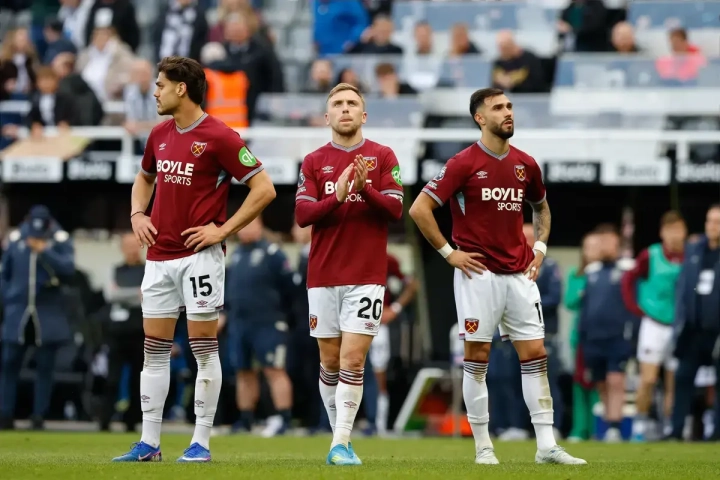
The Premier League relegation battle between West Ham United and Tottenham Hotspur has transcended traditional footballing rivalries. As the two capital clubs desperately fight for top-flight survival heading into the final day of the season, the Mayor of London, Sadiq Khan, has weighed in with a stark warning: Tottenham going down is an internal club crisis, but West Ham going down will directly cost the London taxpayer.
Speaking last week ahead of heating relegation battle, Khan actively urged Londoners, even fans of rival clubs like Arsenal and Chelsea, to root for West Ham’s survival, citing an estimated £2.5 million annual hit to the public purse if the Hammers drop into the Championship.
Here is a breakdown of why West Ham’s relegation carries such a heavy public price tag, and why the mayor is pointing the finger at his predecessor.
The “Worst Deal Imaginable”
The root of the financial issue lies in the controversial 99-year lease agreement struck between West Ham United and the Greater London Authority (GLA) regarding the London Stadium.
Brokered in 2012 under former Mayor Boris Johnson, the agreement allowed West Ham to move into the former Olympic Stadium under incredibly favourable terms. Khan did not mince words when discussing the arrangement this week.
“The previous Mayor, Boris Johnson, did the worst deal that can be imaginable,” Khan told The Standard. “As far as West Ham are concerned, a deal of the century where he basically gave them rent-free, this amazing stadium for 100 years. Now if West Ham are relegated, we, the taxpayers, we City Hall, could lose up to £2.5 million a year.”
The Financial Mechanics of Relegation
Under the current agreement, West Ham pays £4.4 million annually in rent to occupy the London Stadium. However, the lease includes a relegation clause. If the Hammers fall into the Championship, their annual rent obligation is effectively slashed in half.
But the drop in rent is only half the problem for the GLA. Under the terms of the lease, the publicly funded authority is responsible for the game-by-game operational costs of the stadium, including matchday stewarding, security, and staffing.
In the Premier League, a team plays 19 home league matches. In the Championship, the grueling 46-game calendar means West Ham will host 23 home league matches. Therefore, the GLA will be forced to fund operations for four additional fixtures while simultaneously receiving roughly £2.2 million less in rent. Coupled with an expected drop in commercial revenues, City Hall estimates the total funding gap left to the taxpayer will reach £2.5 million annually.
Spurs vs. West Ham: The Contrast in Consequences
While West Ham’s demotion would pull money directly from public funds, Tottenham Hotspur’s potential relegation remains a private financial catastrophe.
Spurs currently sit in 17th place, just two points ahead of the 18th-placed Hammers. Should Roberto De Zerbi’s side fail to secure safety against Everton on Sunday, the financial hit to Tottenham would be catastrophic. Between lost broadcasting revenue, a squad wage bill averaging around £100,000 per week, and the immense debt tied to their £1.2 billion stadium project, demotion could cost Spurs’ ownership upwards of £300 million.
However, that £300 million deficit would be absorbed by the club’s billionaire owners and investors, not the public.
“What I’d say to Londoners who don’t support Spurs is you should probably be cheering on West Ham,” Khan summarized.
With both clubs hanging by a thread, Sunday’s finale isn’t just about sporting pride in the capital; for City Hall and the millions of taxpayers it represents, it’s about avoiding a multi-million-pound bill.