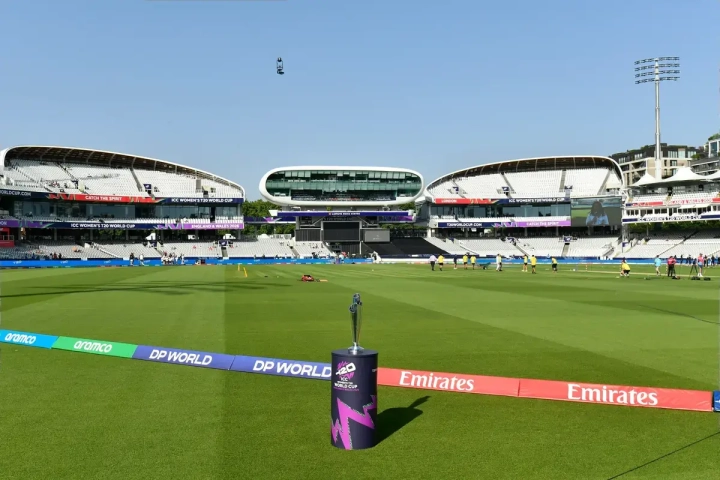
Under the iconic floodlights of Lord’s in St John’s Wood, the Men’s Competition of The Hundred delivered another captivating, high-octane spectacle on Thursday, 6 August 2026. Commencing precisely at 18:30 BST, a highly motivated MI London outfit delivered a clinical and perfectly timed run chase to secure a commanding four-wicket victory over the hosting London Spirit.
The Toss and Pretorius’ Early Onslaught
The deeply influential tactical battle commenced at the coin toss, a singular moment that heavily dictated the overarching narrative of the Thursday evening contest. MI London captain Sam Curran called correctly and, after astutely assessing the slightly overcast conditions alongside a pristine Lord’s surface, immediately elected to field first. The strategic decision was firmly rooted in a pragmatic desire to exploit any early assistance for the seamers under the lights, looking to induce false shots and apply immediate, suffocating scoreboard pressure on the hosts. Guided by the vast tactical acumen of head coach Kieron Pollard, the visiting side aimed to decisively restrict the Spirit batters during the crucial fielding restrictions of the 25-ball powerplay.
Opposite number Liam Livingstone, operating under the tutelage of head coach Andy Flower, accepted the challenge. The home captain implicitly trusted his explosive batting lineup to dictate terms and establish a commanding platform. Tasked with setting a formidable target, the London Spirit opening pair encountered an immediate examination from the express pace of Trent Boult and Richard Gleeson.
However, Lhuan-dre Pretorius possessed an entirely different, highly aggressive script. The dynamic South African batter unleashed a breathtaking, unapologetic counter-attack against the new ball, brutally punishing anything marginally loose delivered by the visiting seamers. Pretorius manipulated the field placements with absolute surgical precision, bypassing the boundary ropes entirely by dealing predominantly in majestic maximums. He compiled a blistering 52 from merely 28 deliveries, an explosive, match-defining cameo featuring five crisp boundaries and three towering sixes.
Middle-Order Stutters and Willey’s Resurgence
Despite Pretorius’ heroics, the inherently unpredictable nature of the 100-ball format quickly manifested in dramatic fashion. The MI London bowling unit executed a spectacular, suffocating squeeze immediately following the conclusion of the fielding restrictions. Trent Boult provided the initial breakthrough, comprehensively bowling the dangerous Jonny Bairstow for 13 from seven balls.
The introduction of leg-spinner Nathan Sowter completely transformed the complexion of the first innings. Sowter delivered an absolute masterclass in flight and deception, exploiting the Lord’s slope to bewilder the Spirit middle order. The Australian-born spinner trapped captain Livingstone leg-before-wicket for a laboured six from nine deliveries, before Gleeson returned to remove the highly-rated Dewald Brevis, who managed merely four runs.
With the top order entirely removed and the scoring rate severely suppressed, the immense responsibility of averting a humiliating collapse fell heavily upon the shoulders of David Willey and James Coles. The pair embarked upon a highly necessary rebuild, blending diligent strike rotation with a resolute defensive technique. Willey showcased his vast, unparalleled experience, launching two massive sixes and three boundaries in a crucial 31 off 18 balls before falling to Boult.
At the opposite end, Coles embraced the role of the ultimate anchor. The talented batter crafted a patient, unbroken 30 from 23 deliveries, absorbing immense pressure and picking the gaps with consummate ease. A late, violent cameo from Jamie Overton—who blasted an unbeaten 13 from six balls—propelled the London Spirit to a highly competitive 160 for five from their allotted 100 balls. Boult (two for 35) and Sowter (two for 29) remained the undisputed standout performers with the ball for MI London.
The MI London Run Chase: A Dynamic Foundation
Defending a substantial total of 161 necessitated an absolutely flawless, highly aggressive start from the London Spirit bowling attack. They desperately required early, consecutive breakthroughs to instil a sense of panic within the visiting dressing room and artificially inflate the required run rate. The opening duo of Will Jacks and James Vince, however, responded with commendable composure and explosive intent.
Jacks immediately seized absolute control of the narrative, producing a breathtaking exhibition of elite stroke play.
Pooran’s Brilliance and a Disastrous Mix-Up
Following the departure of the openers, Nicholas Pooran seamlessly assumed the role of primary aggressor. The explosive West Indian wicketkeeper-batter heavily targeted the spin and medium pace to maintain the visitors’ towering run rate. Pooran ruthlessly manipulated the field placements, launching three colossal sixes and two boundaries in a magnificent 39 from 25 balls.
Yet, the contest swung violently once more during a moment of sheer fielding brilliance and disastrous miscommunication. On the 63rd delivery of the chase, Curran jammed a fast ball from Jamie Overton straight to mid-off and instinctively set off for a rapid single.
Curran attempted a valiant rescue mission alongside the middle order, contributing a gritty 33 to keep his side firmly in the hunt. However, Jamie Overton executed a magnificent spell of restrictive death bowling, adhering strictly to disciplined lines outside the off-stump. Overton concluded his 15 deliveries with exceptional, match-defining figures of two for 23, heavily suppressing the scoring rate and removing Sherfane Rutherford for four.
Raza’s Finishing Masterclass
As the decisive closing stages rapidly approached, the scoreboard pressure steadily compounded. With the required run rate escalating, Sikandar Raza strode to the crease and immediately embarked upon a breathtaking, unyielding assault. The veteran Zimbabwean international completely dismantled the Spirit pace attack, entirely bypassing the boundary ropes by dealing exclusively in maximums.
Raza blasted a phenomenal 32 from merely 16 deliveries, a match-winning knock heavily defined by four towering sixes. He showcased absolute power-hitting prowess, memorably unleashing a spectacular drive over deep cover off Fisher for a colossal maximum that silenced the partisan home crowd.
The complete lack of overarching scoreboard pressure rendered the final deliveries a mere formality. Tom Curran (eight not out from four balls) and Ollie Pope (five not out from two balls) smoothly navigated the concluding sets, guiding MI London across the finishing line with unyielding authority.
Tournament Implications
The widespread ramifications of this highly consequential fixture are genuinely profound for the broader context of the Men’s Competition. For MI London, this commanding victory serves as a powerful statement of intent. Securing their vital fourth win of the campaign, Pollard’s rejuvenated squad has dramatically improved their highly important net run rate and established crucial, potentially unstoppable momentum. They have firmly cemented their position near the summit of the fiercely contested league table, pushing aggressively for a coveted top-three finish that guarantees a secure pathway to the Eliminator or automatic Final qualification.
Conversely, the severely demoralising nature of this heavy home defeat presents a significant tactical headache for Andy Flower and the London Spirit leadership group. Dropping to a deeply concerning record of one solitary win and five damaging defeats, their recurring inability to close out tight fixtures and establish solid middle-order partnerships has cost them incredibly dearly. Rooted firmly near the foot of the table, their summer campaign now appears entirely unsalvageable, demanding a miraculous turnaround simply to restore pride in their remaining fixtures.
Abbreviated Match Scorecard
London Spirit Men – 160/5 (100 balls)