
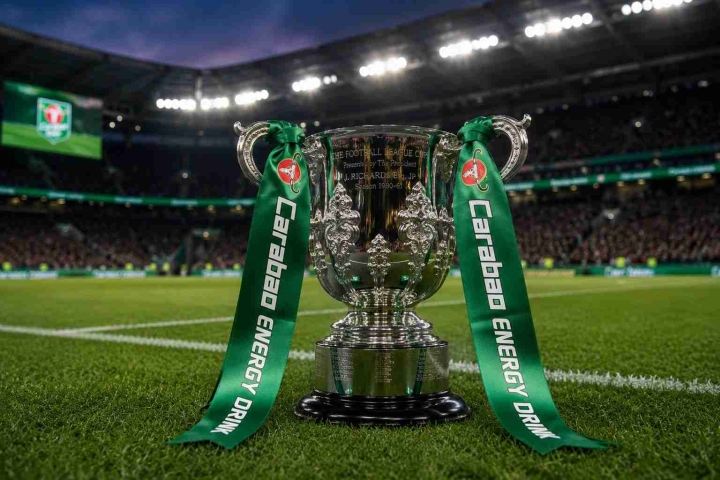
Brentford secured their place in the fourth round of the Carabao Cup after surviving a determined Reading fightback to claim a 2-1 victory at the Select Car Leasing Stadium on Tuesday night.
First-half goals from Callum Wilson and Fabio Carvalho ultimately proved enough for Keith Andrews’ Premier League side, although the final scoreline does not fully reflect the problems Reading caused their visitors during an entertaining cup tie.
Paudie O’Connor pulled a goal back for the Royals in the 72nd minute and had earlier seen a spectacular overhead kick controversially disallowed. Reading manager Leam Richardson was also unhappy about a penalty appeal that went against his side, leaving the League One club feeling they might have taken the game considerably further had some of the major moments fallen differently.
For Brentford, however, the most important outcome was progression. Cup football regularly produces difficult evenings for Premier League sides travelling to lower-league opposition, and this became precisely that sort of contest. Andrews’ team were clinical when their opportunities arrived in the opening half and then showed enough composure to withstand Reading’s pressure after the interval.
There was also a particularly significant moment for Carvalho, who marked his return to competitive action after a lengthy absence by finding the net. His appearance was his first competitive outing in 318 days and his first start for around 11 months, making his goal shortly before half-time one of the biggest positives of the evening for the visitors.
Reading went into the contest knowing they would have to make the most of their opportunities against established Premier League opponents. Richardson made changes to his team but retained enough experience and energy to ensure Brentford would not have a comfortable passage into the next round.
Any plans the hosts had of gradually working their way into the contest were disrupted almost immediately.
Only 136 seconds had been played when Brentford took the lead.
O’Connor lost his footing in the Reading defence at precisely the wrong moment and the loose ball presented Wilson with the type of opportunity an experienced Premier League striker rarely wastes. Dango Ouattara was heavily involved in creating the opening, with the ball breaking invitingly into Wilson’s path.
The striker remained composed and directed a low finish into the bottom corner to put Brentford ahead inside three minutes.
It was a punishing introduction to the evening for Reading and particularly unfortunate for O’Connor, who would go on to become one of the central figures in virtually everything that followed.
A lesser side might have allowed such an early setback against top-flight opposition to dictate the rest of the contest. Reading responded differently.
Rather than retreating and concentrating purely on damage limitation, Richardson’s players began pushing higher up the pitch, competing aggressively for possession and attempting to expose spaces around Brentford’s defence.
The Royals gradually discovered that their opponents could be troubled.
Carvalho remained dangerous at the opposite end and delivered a cross that caused problems inside the Reading penalty area, but increasingly the home side were finding opportunities of their own.
Then came the first major controversy of the evening.
O’Connor, attempting to make amends for his involvement in the opening goal, produced an extraordinary overhead kick that sent the ball into the Brentford net. For a moment it appeared Reading had produced a spectacular equaliser.
Referee Tom Nield thought otherwise.
The goal was disallowed for a high boot, a decision which left Reading furious and would become one of the principal talking points afterwards.
Rather than allowing the disappointment to affect him, O’Connor continued to attack whenever Reading had a set-piece opportunity. He soon came close again, meeting a free-kick with a header that travelled narrowly over the crossbar.
By now the hosts had recovered completely from the shock of Brentford’s rapid opener.
Michael Kayode was required to make an important double clearance as Reading increased the pressure, while Jamie Reid went close as the League One side searched for the equaliser their performance increasingly appeared to merit.
Charlie Savage provided energy in midfield and was prepared to try his luck from distance, while Josh Stokes, Randell Williams and Reid worked to prevent Brentford from settling into a comfortable rhythm.
At the other end, the difference in attacking quality remained obvious whenever Brentford were able to break.
O’Connor endured another nervous moment when a mistake presented Wilson with an opportunity for his second goal. This time goalkeeper Joel Pereira came to Reading’s rescue, standing up well and using his body to deny the striker.
Pereira’s contribution became increasingly important as the evening developed. Brentford possessed enough attacking quality to punish even small defensive errors and the Reading goalkeeper made several interventions that helped keep the contest alive.
Reading continued creating openings of their own. Reid threatened again before Conor Masterson went close, and there was a growing feeling around the stadium that the home side might find the equaliser before half-time.
Instead, Brentford demonstrated exactly why Premier League opposition can be so unforgiving.
With Reading pushing forward, space opened for the visitors to counter.
Ouattara recognised it immediately.
The winger, who had already played an important part in Wilson’s opening goal, drove Brentford forward before slipping an intelligent pass through the Reading defence towards Carvalho.
Making his long-awaited competitive return, Carvalho showed no sign of rustiness when the decisive moment arrived. He controlled the opportunity and calmly finished beyond Pereira in first-half stoppage time.
The timing was devastating for Reading.
Having recovered from conceding inside three minutes and spent much of the remainder of the half proving they could compete with their Premier League opponents, the Royals suddenly walked down the tunnel trailing 2-0.
For Brentford, it was an example of top-flight efficiency. They had not completely controlled proceedings, but they had converted two significant opportunities.
For Reading, the challenge at half-time was as much psychological as tactical.
Richardson wanted greater belief from his players. His message was effectively that respecting Premier League opponents did not mean being intimidated by them. Reading had already demonstrated they could create opportunities and disrupt Brentford, but now needed to play with the conviction required to turn promising situations into goals.
That approach was evident after the restart.
Brentford still carried a considerable threat and could have put the contest beyond Reading, but the home side refused to accept that the tie was finished.
Ellery Balcombe produced an important save to prevent Stokes reducing the deficit, while Kayode missed an opportunity at the opposite end which could have given Brentford a three-goal advantage.
Liam Fraser then fired narrowly wide as Reading continued asking questions.
Ouattara, so influential in both Brentford goals, had an opportunity to make the game safe but could not capitalise. The visitors were finding chances, but their finishing became less convincing as the second half progressed.
That failure to put the contest beyond Reading eventually came back to trouble them.
With 72 minutes played, Savage delivered a corner into the Brentford penalty area and O’Connor attacked it decisively.
This time there could be no argument.
The defender rose above the surrounding players and powered his header into the net.
Reading were back in the game at 2-1 and O’Connor had finally received the goal his performance deserved after the disappointment of seeing his earlier acrobatic effort ruled out.
The atmosphere immediately changed.
What had looked at half-time like a relatively secure Brentford advantage suddenly became a genuine cup contest again. Reading had around 18 minutes plus stoppage time to find another goal and force the issue, while the visitors were faced with the uncomfortable prospect of trying to manage a one-goal advantage against a side playing with renewed confidence.
Andrews responded by introducing additional quality from the bench.
Igor Thiago replaced Wilson, while Jaidon Anthony and Aaron Hickey were also introduced as Brentford attempted to regain control. Earlier, Yehor Yarmoliuk had replaced Mamadou Sangaré at the interval and Jannik Schuster had entered the action during the second half.
Reading also looked to their substitutes, with Jacob Brown, Paddy Lane, Jeriel Dorsett, Kyreece Lisbie and later George Earthy brought into the contest.
The closing stages became increasingly tense.
Thiago had opportunities to restore Brentford’s two-goal cushion but could not provide the decisive finish. Rather than cruising through the final minutes, the Premier League side found themselves having to remain disciplined against opponents who sensed the possibility of forcing extra time.
Pereira continued to play his part for Reading, including denying a late Schuster header, while Brentford attempted to move possession away from dangerous areas and use their experience to reduce the opportunity for one final Reading assault.
Ultimately, the equaliser never arrived.
After five minutes of stoppage time, Brentford could finally celebrate their passage into the fourth round, but Andrews acknowledged afterwards that it had been a far more demanding evening than the visitors might have wanted.
The Brentford manager felt there had been good passages from his team while accepting there were also areas where the performance fell below their usual standards. He acknowledged that the tie was never likely to be straightforward and admitted his players had occasionally contributed to their own difficulties.
Andrews also felt Brentford lacked some of their normal physical strength, something he associated partly with the team he selected, although he remained convinced the starting line-up had been the correct one for the occasion.
His assessment was understandable.
Brentford had done what cup football ultimately demands by winning the game, but Reading had prevented them from controlling it in the manner that might have been expected given the difference between the divisions.
There were nevertheless significant positives.
Wilson demonstrated his goalscoring instincts with the early opener, Ouattara played an important role in creating both goals and Carvalho’s successful return represented perhaps the most encouraging individual development of the night.
Carvalho’s goal carried additional significance because of the amount of football he had missed. Returning after such a lengthy spell away and immediately finding the net provided a reminder of the attacking qualities he can offer Andrews as Brentford negotiate a demanding season.
Progress in the competition matters too.
Andrews has made clear that Brentford want to take the Carabao Cup seriously and see how far they can travel in the tournament. Nights such as this are often an essential part of any extended cup run. Not every victory will be comfortable and sometimes progression depends on surviving periods when the opposition have momentum.
Reading’s feelings afterwards were understandably very different.
Richardson was immensely proud of the way his players competed against Premier League opposition but made little attempt to hide his frustration over the major refereeing decisions.
The disallowed O’Connor overhead kick was the decision that particularly angered the Reading manager. Richardson described it as being among the worst decisions he could remember seeing during his long involvement in football.
His frustration was intensified by another incident in which Reading believed they should have been awarded a penalty. Richardson felt the defender involved had slid towards the ball with his arms away from his body and was convinced his team had a strong case.
The Reading manager’s argument was not that his players deserved sympathy for performing admirably against superior opposition. Quite the opposite. He felt Reading had done enough to be judged by the result rather than simply congratulated for a respectable performance.
That distinction is important.
For Richardson, this was not merely an encouraging defeat. His disappointment came from believing Reading had put themselves in a position where they might genuinely have eliminated a Premier League club.
He was particularly pleased with the response to Wilson’s early goal. Conceding after barely two minutes could easily have destabilised Reading, but instead the players regrouped, became progressively more assertive and created enough opportunities to keep Brentford uncomfortable.
Richardson also highlighted the development he believes is taking place within his squad. Performances over recent weeks have given him encouragement that the players are beginning to take greater responsibility on the pitch, while those given opportunities after changes to the starting line-up demonstrated the value of maintaining high standards away from matchday.
The second-half performance was especially encouraging from Reading’s perspective.
There was more confidence in possession, more willingness to attack spaces and a greater sense that the players believed an upset was possible. Against opponents accustomed to the speed and physical demands of Premier League football, Reading remained competitive until the final whistle.
Cup elimination will still hurt.
There will inevitably be discussion around the disallowed goal and the penalty appeal, particularly because of how narrow the final scoreline became. Had O’Connor’s spectacular first-half effort stood, the entire complexion of the evening could have changed.
But there were also moments Reading could control themselves.
Conceding after 136 seconds placed them under immediate pressure, while allowing Brentford to counter for Carvalho’s goal immediately before half-time was particularly damaging. Against Premier League opposition, those lapses are often decisive.
Brentford ultimately possessed the greater efficiency.
They travelled back to west London with their place in the fourth round secured, Wilson and Carvalho on the scoresheet and another opportunity ahead of them to pursue a competition Andrews clearly believes can offer his squad something significant.
Reading departed the Carabao Cup but did so having pushed established Premier League opponents considerably harder than the league positions of the two clubs might have suggested.
For O’Connor, the evening encapsulated the unpredictability of cup football more than anyone. His early slip contributed to Brentford’s opener, his spectacular overhead kick was ruled out, he went close with another header, and eventually he scored the goal that transformed the closing stages into a genuine contest.
For Carvalho, the night provided a very different story: a long-awaited return to competitive football marked by a goal at precisely the moment Brentford needed one.
And for the two managers, the final whistle produced contrasting emotions.
Andrews could acknowledge imperfections while taking satisfaction from the only statistic that ultimately determines cup survival — Brentford were through.
Richardson could take enormous encouragement from Reading’s performance while simultaneously feeling that his team had come frustratingly close to earning much more.
The Carabao Cup journey continues for Brentford, but their 2-1 victory was anything but routine.
Reading made certain of that.