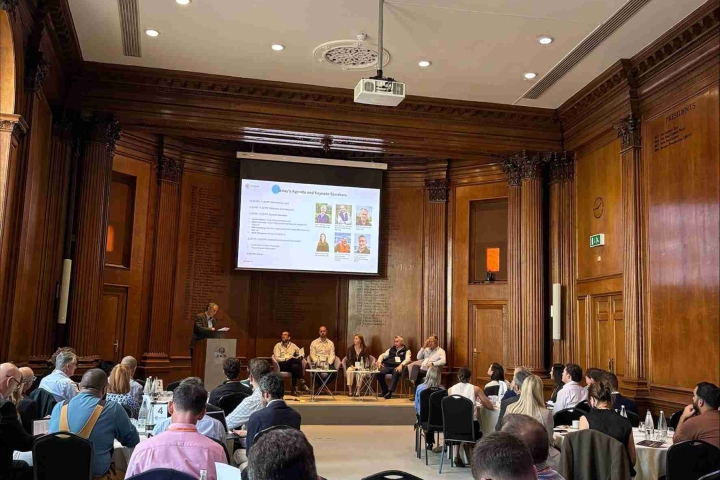
The food industry must move beyond collecting farm data and focus on turning it into action, insight and value for farmers, delegates heard at a Map of Ag conference in London on 1 October.
The Shared Insights, Stronger Collaboration: The Route to a More Resilient Food System event brought together representatives from across the food and farming supply chain to explore how better use of data, stronger collaboration and longer-term relationships can help build resilience in the face of growing environmental, economic and supply chain pressures.
Reflecting on the discussions, Stuart Thomson, Senior Consultant at Map of Ag, said there was a clear opportunity to make better use of the data already being generated across the food system.
“We don’t have a shortage of data, but the real opportunity is in making that data work harder by turning it into insight that helps farmers and the wider supply chain make better decisions. That requires greater collaboration, greater consistency and, crucially, a clear focus on creating value for farmers,” said Mr Thomson.
Sarah Haynes, Head of Sustainability at IGD, highlighted the need for a more joined-up approach, with farmers playing a central role in shaping the changes required.
“We need this kind of farmer centric approach, but we also need a system approach to really unlock the progress that’s needed. The question is how can we translate existing initiatives into genuine joined up action that will drive system progress going forward” she said.
She also stressed the importance of involving farmers in developing solutions and ensuring they offer a clear commercial benefit.
Speakers highlighted the potential for greater consistency in the collection and management of farm data to reduce duplication, with technology helping to streamline and automate the process.
Peter Kennedy, Head of Agriculture and Fisheries at M&S, said the industry needed to ensure the value of data was returned to the farm.
“Data is only valuable with context. Return the value of the data to the farm with meaningful insights,” he said.
The discussion also highlighted the need to recognise the time and cost involved in collecting farm data, alongside financial incentives, technical support and longer-term supply relationships that can give farmers confidence to invest in change.
Phil Hambling, Director of Agriculture and Sustainable Food Sourcing at ABP UK, said the focus should be on using data to identify realistic opportunities and support practical change on farm.
“It’s about making sure that we’re engaging in the right way, meeting farmers where they are and thinking about small steps that actually can add up to a big change,” he said.
For farmers, collaboration needs to result in practical outcomes rather than simply additional demands. Keith Thompson, a fifth-generation farmer from Northamptonshire, said meaningful change would require a long-term commitment from all parts of the supply chain.
“Sustainability is not one action. Resilience is not created overnight. And collaboration isn’t just about signing an agreement, it is about committing for the long term, collecting good data, learning what works and giving farmers the confidence to make changes,” he said.
The discussions highlighted that better data could provide the foundation for a more resilient food system, but its value will only be realised if it is turned into practical insight through collaboration, trust and a clear focus on delivering value for farmers.
These themes will be explored further in a forthcoming Map of Ag white paper, which will look at practical approaches to improving farmer engagement, standardising farm data and creating a fairer distribution of the costs and value of sustainability programmes across the supply chain.
For anyone interested in viewing a copy of the white paper, please scan the QR code below or take a look at the Map of Ag website – https://mapof.ag/press/food-industry-urged-to-turn-farm-data-into-action/