Transport for London (TfL) has today unveiled ‘Buses for London’, the capital’s trailblazing publicly owned bus company, alongside plans for its first route and operational base at Park Royal Depot in west London.
This marks a major milestone in TfL’s transformational plans to establish a publicly owned bus operator for the capital, helping to support innovation, affordability and sustainability in one of the world’s largest bus networks, while improving services for drivers and passengers alike.
TfL has also confirmed that route 6, which runs between Willesden and Victoria station, will be the first service to operate under the new name when ‘Buses for London’ launches in late 2027. A further four routes will be announced over the coming year, to come into operation from 2028.
As part of the Mayor and TfL’s wider work to reimagine the capital’s bus network, ‘Buses for London’ will explore new ways to deliver high-quality, reliable and sustainable services for customers. Buses for London will help TfL test new approaches to innovation, operational efficiency, safety, decarbonisation, customer experience and driver welfare, while maintaining the high standards Londoners expect from the capital’s bus network.
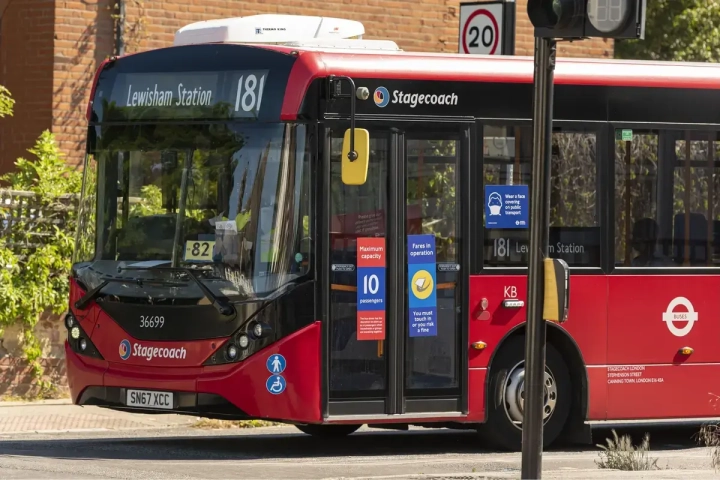
TfL currently contracts bus services to eight privately-owned operators across the capital’s almost 700 bus routes. The creation of a publicly owned bus company will afford TfL greater control over how services are run, enabling it to boost reliability and safety while crucially reinvesting profits to further improve the capital’s transport network. This proposal has been developed following engagement and collaboration with Unite the Union.
Buses are the most inclusive form of public transport in London, with 96 per cent of households within 400 metres of a bus stop and more than 90 per cent served by high-frequency routes. Buses and trams also offer the most accessible and affordable way to travel sustainably in the capital, with fares among the lowest in the UK and all bus routes served by low-floor vehicles with a dedicated wheelchair space, providing a vital lifeline for vulnerable Londoners and lower income households.
Park Royal Depot will become the first operational site for ‘Buses for London’ and will initially support around 100 zero-emission buses. TfL is working in partnership with the Old Oak and Park Royal Development Corporation (OPDC) to develop the site, supporting sustainable growth and improved transport connections across west and central London. The site is being leased until 2033, ahead of regeneration in line with the Old Oak Masterplan Framework, when TfL and OPDC will work together to identify a permanent location for the depot ahead of the lease expiry.
The Mayor of London, Sadiq Khan, said: “I’m excited to announce ‘Buses for London’, a publicly owned London bus company. TfL and OPDC will join forces in this innovative new partnership to establish the capital’s first publicly owned bus operating company. London’s iconic red buses are a vital lifeline for many people, which I’m committed to supporting – and sometimes that means taking bold new approaches, so that our world-leading transport network can deliver even more for all those who rely on it.
“This is an opportunity to really reimagine our bus network so that it provides better value for money, supports our climate goals, makes our roads safer, and overall just works better for passengers and drivers alike. I look forward to seeing Buses for London build on the success of our world-leading bus network as we continue to create a greener, fairer, more prosperous city for everyone.”
Lorna Murphy, TfL’s Director of Buses, said: “Today’s announcement marks an exciting new chapter for London’s buses and an important first step in exploring how a publicly owned bus company could support the future of the capital’s transport network. We are pleased to be working with the Old Oak and Park Royal Development Corporation to establish Park Royal as the first home of a new generation of zero-emission buses, ahead of the site’s transformation as part of the wider regeneration of Old Oak. The depot will provide a base for cleaner, greener services, helping us to build on the progress we’ve already made towards a more sustainable transport system. We look forward to working in partnership with others to bring this vision to life.”
Matthew Carpen, Chief Executive of OPDC, said: “Old Oak is one of London’s most significant regeneration opportunities, with plans to deliver thousands of new homes, jobs and opportunities for Londoners. This site will temporarily support London’s transport network before being released for redevelopment from 2033 as a key part of the Old Oak masterplan, helping to unlock much-needed homes and employment space. We’re pleased to have reached an agreement with TfL that supports cleaner, greener bus services for Londoners today, while enabling the area’s future growth.”
The Mayor and TfL are continuing to transform London’s bus network, including the expansion of the Superloop express bus network to further improve connectivity across outer London, with the recent introduction of the SL12 between Gants Hill and Rainham. Bus services are being expanded in outer London, with changes made to some central and inner London services to align with changing levels of demand in those areas. There have also been new bus priority measures introduced and world-leading traffic signal technology to cut delays and improve reliability. TfL is also investing in the next generation of bus shelters and improved real-time information for customers to improve customer experience. TfL continues to electrify its bus fleet, with more than 3,000 zero emission buses now in circulation on London’s roads.