This autumn, Tate Modern will present the first major exhibition to explore Pictorialism as a global photographic movement. From the 1880s, Pictorialism transformed photography from a documentary tool into a fine art to establish a powerful artistic medium. Moving beyond traditional photographic histories centred around Europe and North America, the exhibition broadens both the geographical and chronological understanding of the movement, tracing its evolution through to the 1960s. Spanning four thematic chapters, the exhibition will bring together 200 rare vintage prints by over 80 artists working across Europe, North and South America, Asia and Australia, revealing the extraordinary beauty, ambition and international reach of Pictorialism while offering a bold new history of photography. The exhibition will build on Tate Modern’s ongoing commitment to rethinking traditional histories of modern art through an international lens.
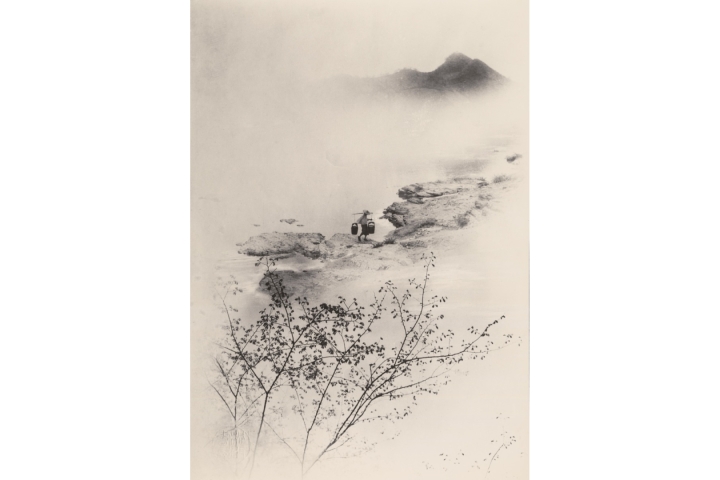
The exhibition opens with the emergence of the movement in the late 19th century, when photographers sought to establish photography as a legitimate art form. Bringing together celebrated figures such as the French American photographer Adolph de Meyer and the American Clarence H. White with lesser-known practitioners, including Chinese photographers Long Chin-san and Luo Bonian and Indian-born Shapoor N. Bhedwar, the exhibition will reveal the remarkable diversity of styles, subjects and techniques that defined the movement across different cultural and geographical contexts. During this formative period, photographers embraced the expressive potential of the medium, drawing inspiration from painting and other established artistic traditions. Highlights will include British photographer Emma Barton‘s delicately rendered portrait The Awakening 1903, and Long Chin-san’s imaginative landscape Pavilion Fairyland c. 1940s, which draws on the visual language of traditional Chinese ink painting.
The second section of the exhibition will examine the art of photographic printmaking. Pictorialists used sophisticated printing techniques and a wide range of papers to transform each print into a unique aesthetic object. Pairs of photographs will demonstrate the impact of different printing processes on the final image, including A Norfolk Boat-Yard 1886 by British photographer Peter Henry Emerson, while a functioning darkroom will offer visitors insight into the intricate techniques of developing and printing photographs. The section will also trace the rise of studio photography, as artists employed elaborate sets, costumes and theatrical staging to create carefully constructed images. Portraits by British photographers, including works by Bertram Park, Yvonne Gregory and Cavendish Morton, as well as Vivex colour prints from Yevonde‘s Goddesses series, illustrating the movement’s enduring spirit of experimentation and innovation.
A major section of the exhibition is dedicated to the relationship between Pictorialism and the photographic societies, camera clubs and salons that shaped the movement’s international development. These cosmopolitan networks brought photographers together to exhibit and publish their work, fostering the exchange of ideas, techniques and artistic influences across borders. Particular attention is given to the Royal Photographic Society in London and the recently uncovered histories of international camera clubs, including Guangshe in Shanghai, The New Line Group in South Korea and the Photographic Society of Singapore. Rare books, journals and magazines produced by some of these societies will reveal the vibrant print culture through which photographic ideas circulated globally and took shape, showcasing work published in editions of Camera Work, Shashinkai: The Monthly Photographic Journal from the 1920s, and USSR in Construction from the 1930s amongst other publications.
The final section of the exhibition reconsiders the relationship between Pictorialism and Modernism. Highlights will include work by the Sri Lankan photographer Lionel Wendt, including solarised portraits from the 1930s, and the Japanese artist Shigeru Onishi, whose experimental compositions of the 1950s demonstrate the movement’s continuing dialogue with Modernist visual languages. It will also trace the evolving practices of three of the leading American modernist photographers, Edward Steichen, Paul Strand and Edward Weston, whose careers bridged both movements, showcasing works such as Steichen’s Primo Carnera c.1922 and Strand’s Miss Thomson, New Mexico c. 1922. Together, these works underscore Pictorialism’s enduring legacy and its role in establishing photography as a true medium of creativity and artistic expression that continues today.