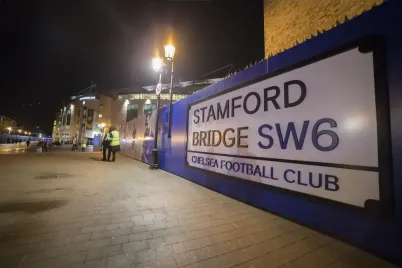
Following a dramatic legal conclusion on Friday afternoon, Chelsea Football Club finally received absolute clarity regarding their punishment for historical financial breaches.
With the words “transfer ban” dominating the headlines, a wave of immediate anxiety understandably swept through the fanbase. Memories of the club’s 2019 transfer embargo, which forced them to rely heavily on academy graduates, remain fresh in the memory. However, the critical caveat in Friday’s ruling is the word “suspended”.
To understand the tangible impact of these sanctions on the day-to-day operations at Stamford Bridge, it is essential to dissect the legal terminology. What exactly are the parameters of this punishment? What can the recruitment department execute in the current market, and what are they strictly prohibited from doing? Here is a comprehensive breakdown of Chelsea’s current operational reality.
The Mechanics of a Suspended Ban
In sports governance, a suspended sentence acts effectively as a probationary period, hanging over the club like a Sword of Damocles. The FA has decreed that Chelsea will be banned from registering new players for two complete, consecutive transfer windows.
This means the ban is entirely conditional. If Chelsea maintain absolute compliance with all FA rules and regulations, specifically those relating to agents, intermediaries, and third-party investments, between now and the summer of 2027, the transfer ban will simply expire without ever coming into effect.
The club is effectively operating on a strict warning. The FA, alongside the Premier League and UEFA, acknowledged that these historical breaches occurred under the previous ownership of Roman Abramovich, and noted that the current Todd Boehly-led BlueCo consortium voluntarily self-reported the irregularities.
What Chelsea CAN Do
For the current head coach and the overarching recruitment department, the suspended nature of the FA ban is the ultimate relief. In the immediate term, it is entirely business as usual regarding the first team.
1. Sign First-Team Players Without Restriction
Chelsea are completely free to participate in the current summer transfer window.
2. Engage with Agents and Intermediaries
Despite the sanctions resulting from 74 breaches of FA agent rules, the club is not prohibited from dealing with agents moving forward.
3. Renew Contracts and Facilitate Departures
The club retains full autonomy over its existing roster. They are free to extend the contracts of current players, negotiate wage adjustments, and sanction the sale or loan of squad members to other clubs. Generating outgoing revenue remains a vital component of Chelsea’s broader financial strategy, and the FA’s ruling does not impede this process in any capacity.
What Chelsea CANNOT Do
While the first-team transfer operations remain unimpeded, Chelsea are not entirely free from tangible, active restrictions. Furthermore, the parameters for triggering the suspended ban are incredibly strict.
1. Commit Any Further Regulatory Breaches
This is the most critical restriction. Chelsea have absolutely zero margin for error regarding financial reporting and intermediary dealings.
2. Sign Domestic Academy Players (Active Ban)
While the FA’s Friday ruling focused on a suspended ban, it is vital to remember the separate disciplinary action concluded by the Premier League earlier in March 2026. Alongside a £10.75 million fine, the Premier League handed Chelsea an immediate, active nine-month transfer ban regarding youth recruitment.
This specific sanction prevents Chelsea from registering any Academy players from other English professional clubs (Premier League and EFL) until the end of the calendar year.
Operational Summary: The Current Landscape
To clarify the highly complex web of overlapping sanctions delivered by the FA, the Premier League, and UEFA over the past year, the club’s current operational capacities can be summarised as follows:
| Transfer Activity / Action | Current Status | Governing Sanction / Condition |
| First-Team Signings | ✅ Permitted | No immediate restrictions; subject only to standard PSR limits. |
| Player Sales & Loans | ✅ Permitted | Fully allowed to manage outgoing squad logistics. |
| Contract Extensions | ✅ Permitted | Internal squad management remains unaffected. |
| International Youth Signings | ✅ Permitted | Subject to standard FIFA age and international regulations. |
| Domestic Academy Signings | ❌ Banned | Active 9-month Premier League ban (March–December 2026). |
| Agent / Intermediary Breaches | ❌ Strictly Prohibited | Any infraction triggers an immediate two-window transfer ban. |
The Context of the Sins
To fully appreciate why Chelsea are walking this regulatory tightrope, one must look back at the origins of the investigation. The 74 charges brought forward by the FA, and the parallel probes by the Premier League and UEFA, all centred on the period between 2009 and 2022.
During the Abramovich era, the club engaged in 36 different secret payments, totalling nearly £47.5 million, directed to unlicensed intermediaries and offshore third-party entities registered in locations like the British Virgin Islands.
When the new consortium assumed control, they discovered this shadow accounting and immediately notified the authorities.
Furthermore, the decision to successfully appeal the initially proposed suspended six-point deduction highlights the modern realities of Premier League football. In a climate where point deductions have been aggressively deployed against clubs failing to meet financial targets, the lingering threat of losing six points over an administrative error was deemed far too perilous by the Chelsea hierarchy. Swapping that threat for a suspended transfer ban is viewed internally as a massive legal victory.
The Road Ahead
Ultimately, the conclusion of the FA’s investigation allows Chelsea to close a dark and legally perilous chapter of their modern history. The £10 million fine draws a final line under the Abramovich era’s financial misconduct.
For the supporters, the primary takeaway is reassuring: the club’s immediate ability to compete in the transfer market and challenge for major honours remains entirely intact.