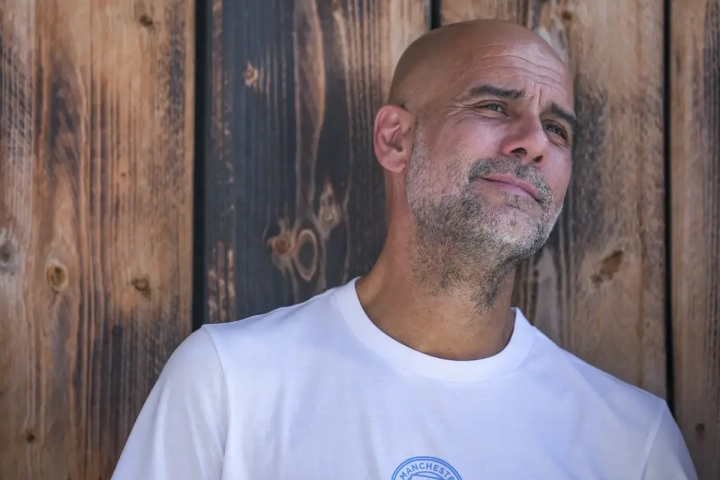
When Pep Guardiola formally bid farewell to Manchester City in May, stepping down after a transformative decade that yielded an astonishing 20 major trophies, he made his immediate intentions perfectly clear. Exhausted by the relentless, suffocating demands of the Premier League and the physical toll of continuous domestic dominance, the legendary tactician declared he would be taking an extended break from the dugout. Yet, barely two months into his highly publicised sabbatical, the global footballing landscape has been sent into a frenzy by a spectacularly ambitious pursuit from the Italian Football Federation (FIGC).
The Azzurri, currently languishing in a state of historic disrepair following their catastrophic failure to qualify for the 2026 FIFA World Cup, have identified Guardiola as their ultimate dream appointment. Reports emerging over the weekend have confirmed that high-level delegations from Italy have travelled directly to Spain to conduct face-to-face negotiations. The prospect of the Catalan mastermind swapping the rain-swept training pitches of Manchester for the romantic allure of the Italian national side has captivated the continent. However, dragging him out of his hiatus remains a monumental, perhaps impossible, task for a federation desperately seeking a saviour.
The Barcelona Summit: Maldini’s Charm Offensive
The rumours transitioned from idle speculation to concrete reality when photographic evidence surfaced on social media showing Paolo Maldini and Leonardo travelling to Barcelona. Maldini, recently appointed as the FIGC’s Technical Director and President of Club Italia in a sweeping structural overhaul by federation president Giovanni Malagò, views Guardiola as the definitive catalyst required to restore national pride.
According to multiple outlets, including Sky Sport Italia, the discussions between the Italian delegation and Guardiola extended far beyond a preliminary, polite exchange. The talks reportedly spanned a three-day period over the weekend. The sheer length of this summit suggests that while Guardiola is fiercely protective of his current downtime, he has not flatly dismissed the federation’s advances out of hand.
Maldini and Leonardo’s pitch likely centred heavily on the prestige and historical weight of the Italian project. They are offering him a blank canvas to completely rebuild a traditional powerhouse that has spectacularly lost its way. The approach highlights a radical shift in Italy’s philosophy; rather than relying on the traditional, defensive-minded domestic coaching carousel, they are targeting the preeminent offensive mind of his generation to lead a cultural revolution within the Coverciano training base.
The Fall of the Azzurri
To fully comprehend the FIGC’s desperation, one must grasp the absolute depth of the current crisis engulfing the Italian national team. Earlier this year, Italy suffered the unthinkable humiliation of failing to qualify for a third consecutive World Cup, missing out on the 2026 tournament in North America just as they missed the 2018 and 2022 editions. This historic embarrassment immediately precipitated the departure of head coach Gennaro Gattuso, whose contract was terminated by mutual consent.
Currently, the senior side is being managed on a caretaker basis by Under-21 coach Silvio Baldini. While Baldini successfully navigated recent friendly fixtures against Luxembourg and Greece, the federation acknowledges that a permanent, world-class figurehead is urgently required ahead of the upcoming UEFA Nations League campaign and the subsequent qualification cycles.
The Italian public is demanding systemic change. The emotional highs of their UEFA Euro 2020 triumph feel like a distant, fading memory, entirely overshadowed by their repeated inability to navigate World Cup qualification. Malagò, Maldini, and Leonardo know that appointing a figure of Guardiola’s magnitude would instantly silence the critics, restore enthusiasm among a deeply disillusioned fanbase, and make Italy a far more attractive destination for dual-national prospects weighing up their international allegiances.
The Sabbatical Hurdle: Why Guardiola Might Say No
Despite the sheer romanticism of the Italian narrative, the primary obstacle remains Guardiola’s resolute commitment to his personal well-being. When confirming his departure from the Etihad Stadium, where he is due to have the extended North Stand renamed in his honour, he was incredibly candid about his dwindling energy reserves and the necessity of stepping away.
“From a mental standpoint, I don’t miss anything at all,” Guardiola recently stated regarding football. “I started managing at 37, and my entire life has been bound to football. Now, I want to try and discover life, to be happy doing other things that have nothing to do with football.”
The decorated coach also highlighted deeply personal reasons for his hiatus, grounding his decision in family rather than fatigue alone. “I decided to stop because I want to take a bit more care of myself. I want to spend more time with my children and with my father, who is 95 and still with us. I’ve reached the age of 56, I’m no longer young, and the way you see things changes as well. I’m still adjusting to this new phase, but it’s going pretty well.”
After nearly two decades of operating in the pressure cookers of Barcelona, Bayern Munich, and Manchester City, where he was expected to win every single match he contested and successfully secured four consecutive Premier League titles, Guardiola has undoubtedly earned his rest. Furthermore, he is technically still employed by the City Football Group. Upon stepping down as manager, he accepted a lucrative Global Ambassador role to provide technical advice across their worldwide portfolio of clubs. Severing that new relationship so swiftly to plunge back into the relentless stress of elite management seems highly improbable.
The Lure of International Football
If there is a glimmer of hope for Maldini and the FIGC, it lies in the unique operational rhythm of international football. Throughout his storied career, Guardiola has frequently hinted at a lingering desire to eventually manage a national team at a major tournament before he permanently retires.
The appeal is glaringly obvious. Unlike club management, which demands grueling, day-to-day oversight, endless media obligations, and the exhaustion of playing three matches a week, the international calendar offers significant breathing room. An international manager operates in concentrated bursts during designated seasonal breaks and summer tournaments, providing a much more forgiving work-life balance that could theoretically align with his current mindset.
For a man who wishes to spend more time with his family in Catalonia while still satisfying his insatiable tactical itch, managing a prestigious European nation could offer the perfect compromise. Furthermore, Italy’s rich tactical heritage and deep historical appreciation for defensive structure would present a fascinating ideological challenge for Guardiola’s possession-heavy, attacking philosophy. Blending his intricate passing networks with the traditional Italian defensive grit is a prospect that would entice any footballing purist.
Contingency Plans: Conte Waiting in the Wings?
While the FIGC has actively paused its recruitment process to launch this aggressive charm offensive in Barcelona, the federation simply cannot afford to wait indefinitely. If Guardiola ultimately concludes that the timing is wrong and politely declines the offer, Italy has robust contingency plans ready to be activated.
Reports heavily suggest that Antonio Conte is standing by in the wings. The fiery tactician, who previously managed the national side with notable success between 2014 and 2016, is viewed as a highly capable alternative ready to instil discipline and structure into a fractured, confidence-drained dressing room. Other high-profile names, including Juventus legend Andrea Pirlo and former Azzurri boss Roberto Mancini, have also been loosely linked with the vacancy over the past month.
However, the sheer effort expelled in the pursuit of Guardiola strongly indicates that the FIGC views candidates like Conte as secondary options. The federation has made a conscious, highly publicised decision to shoot for the moon, fully aware that securing the former Manchester City manager would be the greatest coup in their modern history and send a terrifying message to their European rivals.
Conclusion
As July draws to a close, the footballing world waits with bated breath for Guardiola’s final decision. The face-to-face meetings with Paolo Maldini and Leonardo definitively prove that the Italian Football Federation is deadly serious about ushering in a golden era under his elite stewardship.
Yet, convincing a man who has openly admitted to needing a profound mental break to inherit one of the most pressurised, politically complex jobs in international sport requires nothing short of a miracle. Guardiola has absolutely nothing left to prove in the club game, having reshaped the tactical landscape of England, Germany, and Spain. Whether he feels reinvigorated enough to conquer the international stage with Italy, or simply wishes to continue enjoying a well-deserved summer in the tranquil company of his family, will undoubtedly be the defining managerial story of 2026.